
Microsoft has released a preview of Clustered Geometry and Partitioned Top-Level Acceleration Structures (PTLAS) for DirectX Raytracing, and memory usage is one of the biggest wins in its own test. The features are part of the Agility SDK 1.722 preview, and Microsoft calls it the most significant DXR update since the API debuted in 2018.
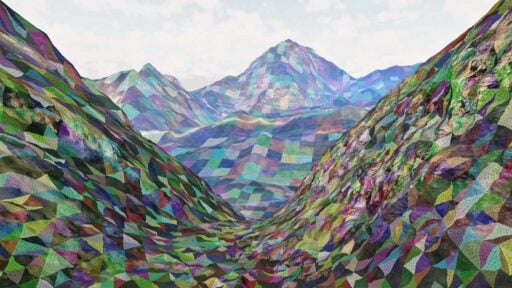
Ray tracing relies on acceleration structures, which store scene geometry so rays can find what they hit. For animated or streamed content, these structures can take up a lot of VRAM. In Microsoft’s clustered geometry sample on a Radeon RX 9070, the difference was huge:
| Metric | Traditional BLAS rebuild | Clustered geometry | Change |
| Static acceleration structure memory | 723 MiB | 527 MiB | 27.0% less |
| Animated acceleration structure memory | 6,794 MiB | 244 MiB | 96.4% less |
| Total, including TLAS | 7,519 MiB | 774 MiB | 89.7% less |
The animated geometry saw the biggest drop. The same test also showed frame rate rising from 1.2 FPS to 79 FPS, and per-frame GPU build time falling from 788 ms to 3.11 ms.

Microsoft warns that games should not expect gains of this size though. The sample is a test playground, and the company says results will vary with settings, load and GPU. To add, clustered geometry needs far more temporary scratch memory during builds:
- Static build scratch: 1.83 MiB with traditional rebuilds versus 526 MiB with clusters
- Animated build scratch: 8.25 MiB versus 179 MiB
Scratch buffers are temporary working space used while building, while the acceleration structures are what stays resident. Even so, developers will need to budget for the extra scratch space, and Microsoft’s sample shows that tradeoff clearly.
Supported hardware
The features do not need new hardware capabilities beyond existing raytracing support. Availability depends on driver work from each vendor:
- NVIDIA: all RTX GPUs
- AMD: Radeon RX 9000 series
- Intel: Arc B-Series and Core Ultra (200V series, Series 3)
- Qualcomm: Snapdragon X2 support targeted for Q1/Q2 2027
Support for older ray-tracing GPUs is still to be determined.
When gamers will see it
Gears of War: E-Day already uses clustered geometry through NVIDIA’s vendor-specific RTX Mega Geometry. Standardizing it in DirectX gives developers a common path across AMD, Intel and NVIDIA hardware.
This is a developer preview, so it will not show up in games. It requires the preview Agility SDK, Shader Model 6.10, a supporting driver and Windows Developer Mode. Microsoft is collecting developer feedback on Discord before a final release and has not given a retail date.