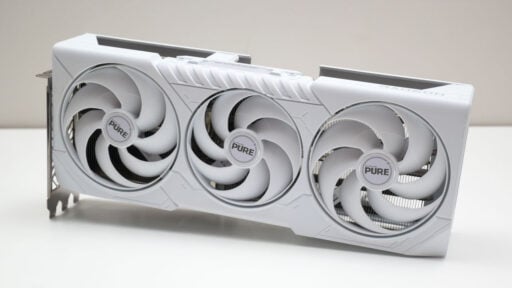
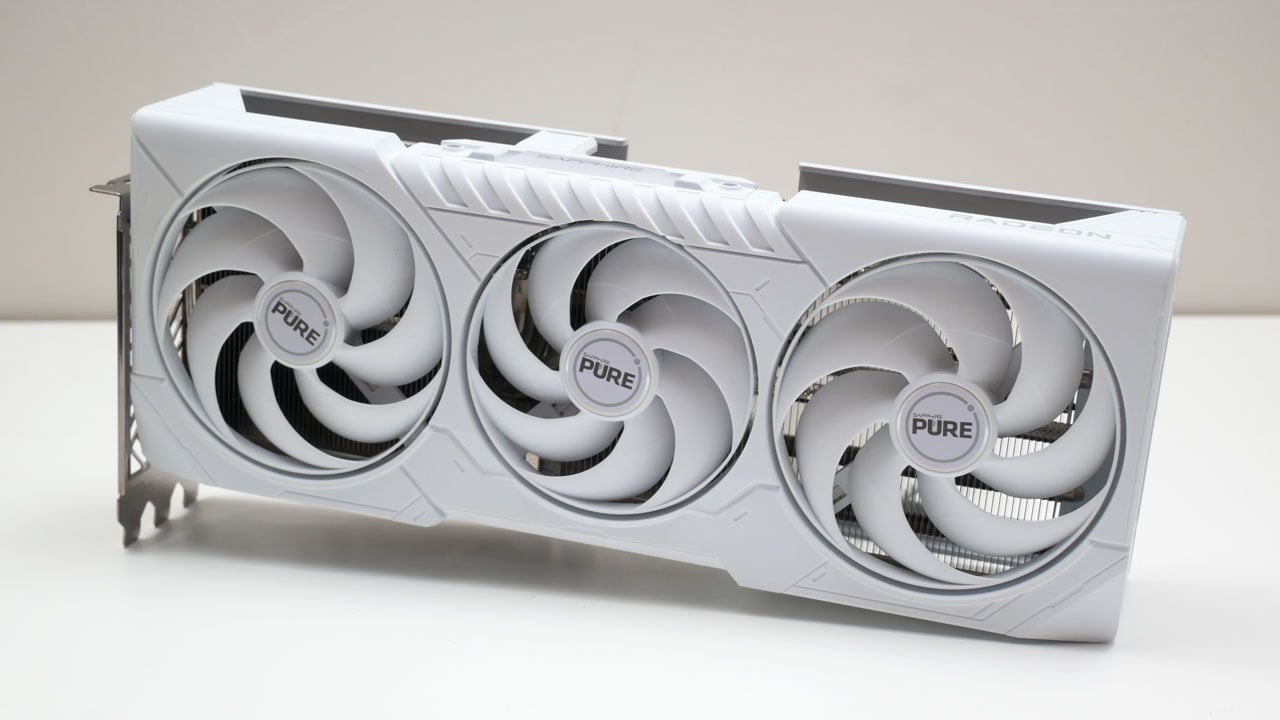
What we have for review is the AMD Radeon RX 9070 XT, more specifically the SAPPHIRE PURE model. This is a high-end graphics card, featuring the Navi 48 GPU at its core along with a healthy 16 GB of GDDR6 of VRAM.
Disclosure: AMD sent the Radeon RX 9070 XT for the purpose of this review. The brand did not ask me to say anything particular about it.
Table of Contents:
- 1 Technical Specifications
- 2 Packaging and Accessories
- 3 Design, Layout and Build Quality
- 4 3D Rendering
- 5 AI Image Generation
- 6 API Test
- 7 Feature Test
- 8 Counter-Strike 2
- 9 Cyberpunk 2077
- 10 Assetto Corsa
- 11 Forza Horizon 5
- 12 Shadow of the Tomb Raider
- 13 Horizon Zero Dawn Remastered
- 14 Total War: Warhammer III
- 15 Company of Heroes 3
- 16 Temperature
- 17 Power
- 18 Noise
- 19 Final Thoughts
Technical Specifications
The Radeon RX 9070 XT is a top-tier PCIe 5.0 x16 graphics card built on TSMC’s 4 nm process, featuring the RDNA 4.0 architecture and the Navi 48 XTX GPU. It packs 16 GB of GDDR6 memory and draws power through dual 8-pin connectors. With a 304 W TDP, AMD suggests a 700 W power supply, though some partner models, like SAPPHIRE’s PURE RX 9070 XT, recommend going up to 750 W.
| GPU | |
|---|---|
| Cores | 4096 |
| Core Clock | 3010 MHz (Boost), 2460 MHz (Game) |
| Architecture | RDNA 4.0 (Navi 48 XTX) |
| Manufacturing Process | 4 nm |
| TDP | 304 W (Reference), 317 W (SAPPHIRE PURE) |
| Memory | |
| Memory Clock | 20 Gbps |
| Memory Bus Width | 256-bit |
| Memory Capacity | 16 GB |
| Memory Type | GDDR6 |
| Bandwidth | 644.6 GB/s |
| Connectivity | |
| Display | 2x DisplayPort 2.1a, 2x HDMI |
| Power | 2x 8-pin |
| Dimensions | |
| Length | 320 mm |
| Width | 120.25 mm |
| Height | 61.6 mm |
| Weight | N/A |
Packaging and Accessories
The SAPPHIRE PURE RX 9070 XT comes in a large two part box.
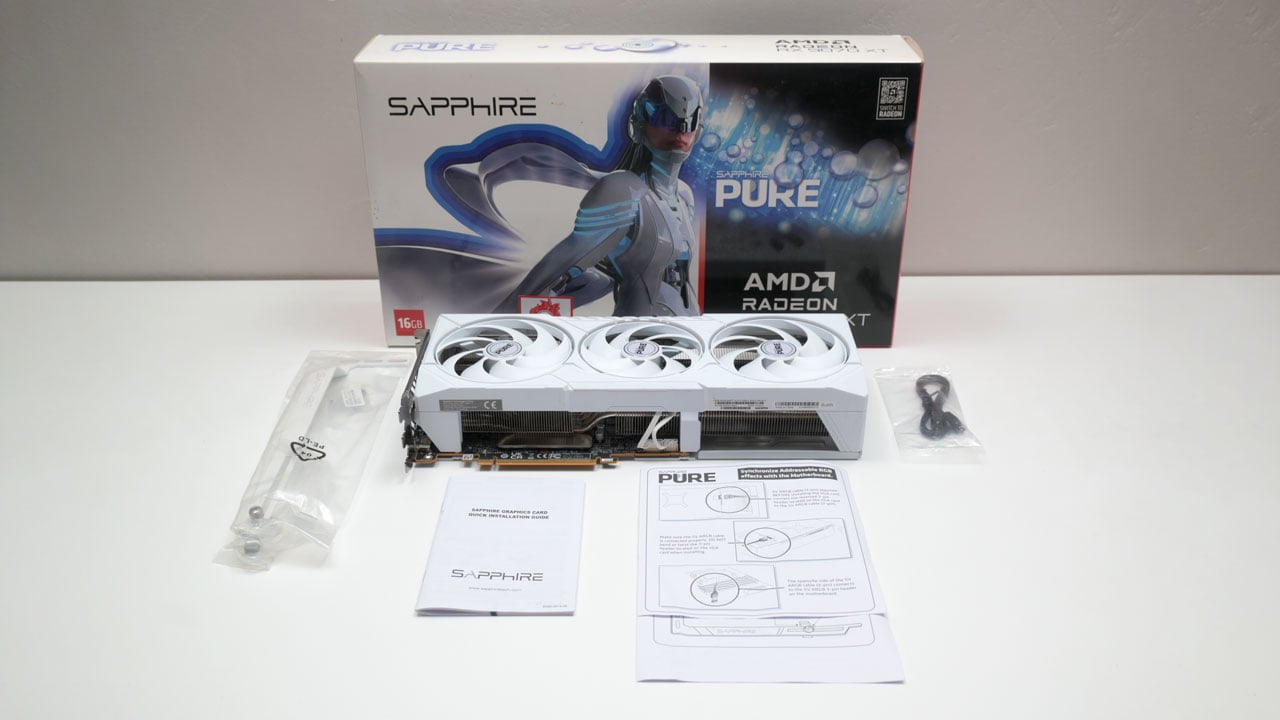
Scope of delivery are as follows:
- SAPPHIRE PURE RX 9070 XT graphics card
- L-Shaped graphics card holder
- 3-pin 5 v ARGB cable
- Documentation(s)
Design, Layout and Build Quality
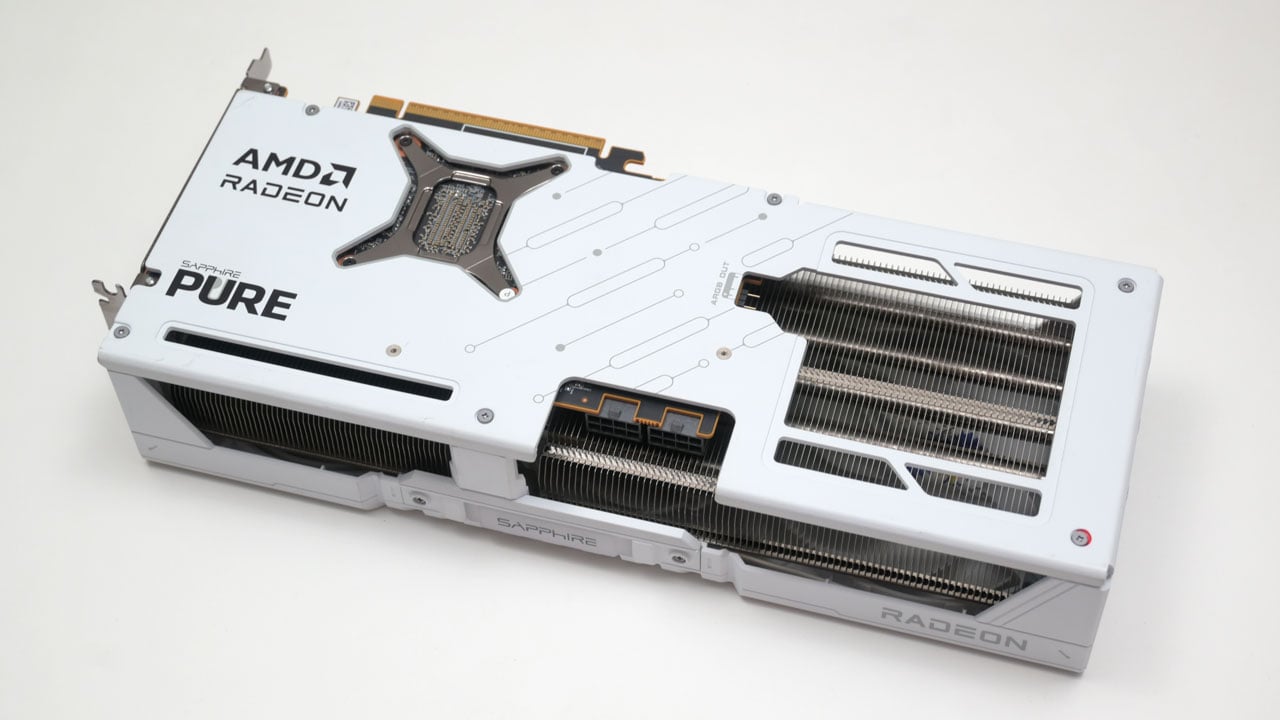
The SAPPHIRE PURE RX 9070 XT is an all-white graphics card with three fans capable of 0 dB operation. Measuring about 320 x 120.25 x 61.6 mm, it’s technically a triple-slot design that fits right in with most modern mid-tower setups.
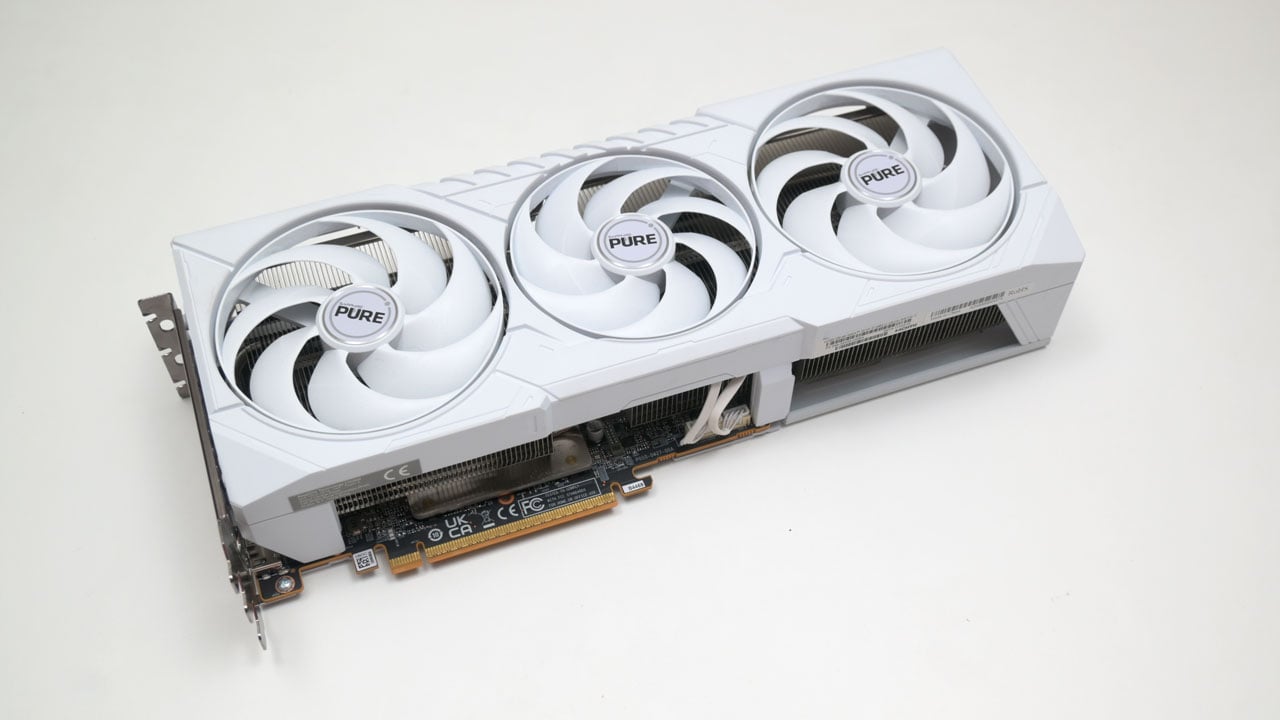
SAPPHIRE’s PURE RX 9070 XT features a half-size PCB paired with an efficient cooling setup that covers the GPU, VRM, and memory. The backplate is noticeably thicker than those on most cards I’ve seen in recent years, giving the whole build a solid, rigid feel. Even sturdy enough that the included bracket isn’t really necessary.
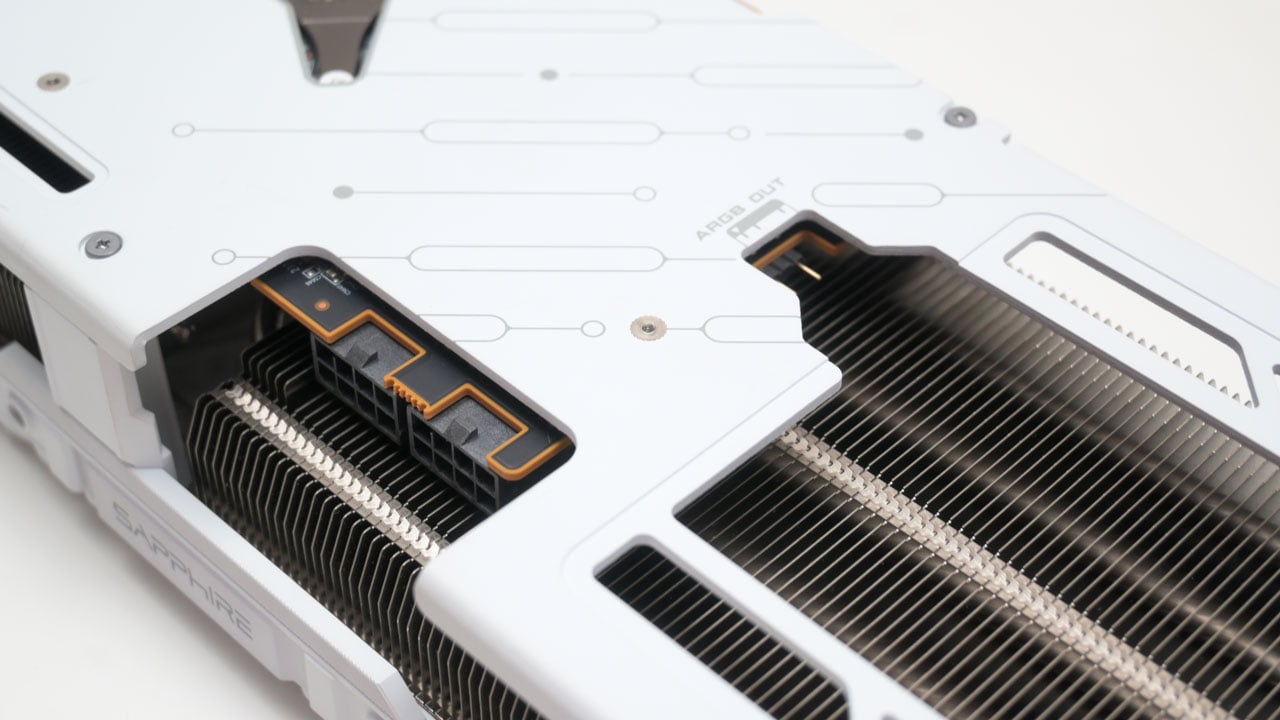
The RX 9070 XT runs on dual 8-pin connectors, which can theoretically supply up to 375 watts which is well above the card’s 317 W TDP. That leaves decent headroom for some serious overclocking. This card also supports motherboard controlled lighting effects via the 3-pin ARGB connector.
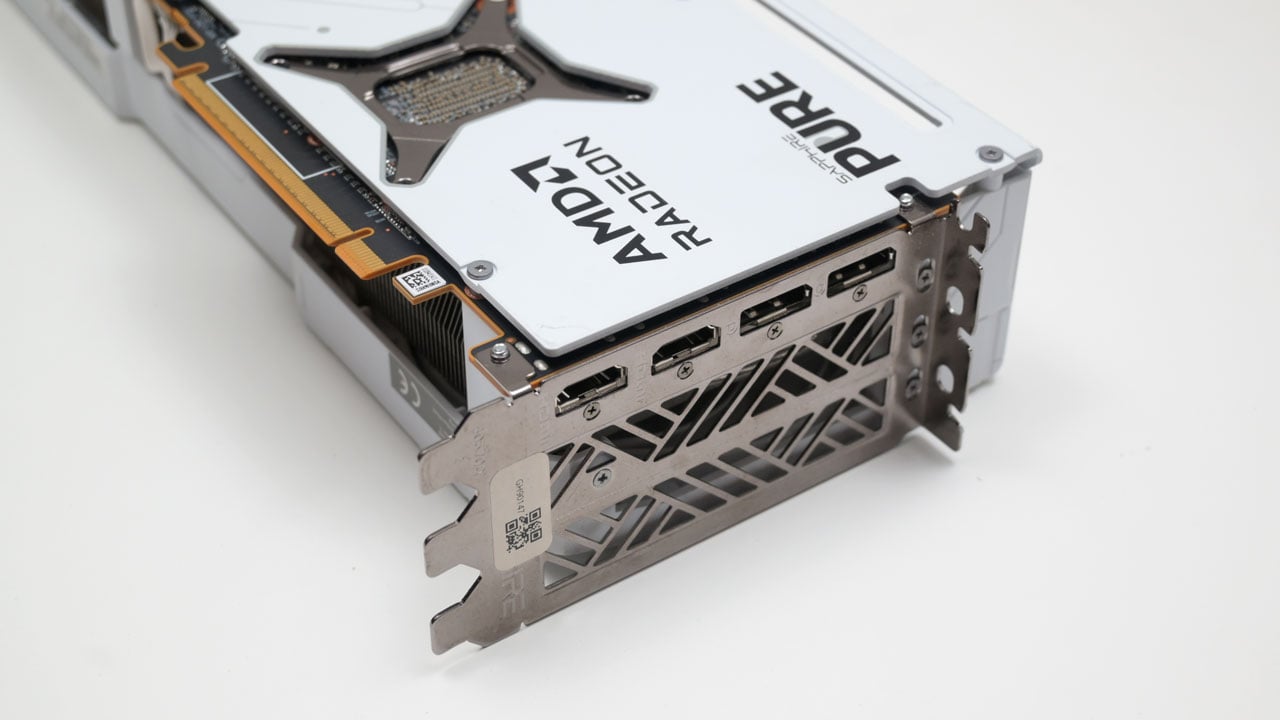
Connectivity options include two DisplayPort 2.1a ports and two HDMI ports. Venting is available at the back; however, the heatsink’s fin array suggests it releases more heat inside the case rather than expelling it out at the said area.
3D Rendering
The RX 9070 XT demonstrates a significant performance leap in rendering efficiency vs the RX 7800 XT, specifically excelling in high-geometry and complex lighting scenarios with a peak of 1,634 SPM in Blender’s Monster scene. For reference, we are testing the RX 9070 XT with the AMD Ryzen 9 7900X along with a 32 GB DDR5-5600 memory kit.
AI Image Generation
Overall, these results showcase the RX 9070 XT as a capable AI workstation card for mid-range image generation, though it is clearly taxed by the high-resolution requirements of the Stable Diffusion XL pipeline.
API Test
In Time Spy, the 9070 XT is roughly 35% faster than the 7800 XT. The real standout however, is ray tracing performance. With its Port Royal score, it’s roughly 73% faster than the 7800 XT. This suggests that the RDNA 4 architecture has finally fixed its RT performance that slowed down previous generations, moving it from a mid-range contender to something that rivals higher-end cards like the RTX 4080 in specialized rendering effects.
Feature Test
The RX 9070 XT delivers a 74% boost in Ray Tracing and nearly a 50% improvement in Sampler Feedback performance compared to the RX 7800 XT, with RT performance closely matching the previous API test results.
Counter-Strike 2
The 9070 XT’s 4K performance is seriously impressive. It makes competitive play on 240 Hz 4K monitors possible, something the 7800 XT couldn’t pull off without lowering settings to Medium or Low. Plus, the 1% low at 4K comes in at 120.5 FPS, a solid 28% boost over the 7800 XT, delivering a noticeably smoother experience during intense effects like smokes and molotovs.
Cyberpunk 2077
If these numbers hold, the RX 9070 XT is a transformative upgrade for Cyberpunk 2077 players. While the RX 7800 XT was a 1440p card that could do 4K with a bit of help, the 9070 XT is a 4K-native powerhouse.
Assetto Corsa
The Assetto Corsa benchmarks for the RX 9070 XT illustrate how RDNA 4 handles legacy engine workloads. In a title like this which is frequently used for high-refresh sim racing and VR, the 9070 XT provides a significant overhead cushion that the RX 7800 XT lacks at higher resolutions.
Forza Horizon 5
The Radeon RX 9070 XT easily pushes past 1080p and 1440p limits, with only a 7% performance gap between the two. It really shines at 4K, delivering an impressive 207 FPS on average, with 0.2% lows still holding strong above 159 FPS.
Shadow of the Tomb Raider
In Shadow of the Tomb Raider, the RX 9070 XT hits a ceiling at lower resolutions, evidenced by 0.2% lows that remain identical between 1080p and 1440p. While the jump to 4K triggers a sharp 39% performance drop, the resulting 148 FPS average is remarkably stable, with 1% lows trailing the average by only 11%.
Horizon Zero Dawn Remastered
In Horizon Zero Dawn Remastered, the RX 9070 XT runs into a bottleneck at lower resolutions, showing only about a 5% performance gap between 1080p and 1440p. It really starts to shine at 4K, delivering a solid 116 FPS on average with impressively steady 0.2% lows that never drop below 89 FPS.
Total War: Warhammer III
Total War: Warhammer III finally gets the RX 9070 XT to scale, with a noticeable 36% performance drop from 1080p to 1440p which is something we didn’t see in earlier games. At 4K, the card still averages 97.7 FPS, but the real highlight is the rock-solid consistency; 0.2% lows of 87.1 FPS mean just a 10% difference from the average. That kind of stability is rare in such a draw-call-heavy title, keeping even the wildest battles smooth and free from micro-stutter.
Company of Heroes 3
In Company of Heroes 3, the RX 9070 XT delivers an impressive 155.4 FPS on average with a minimum of 107 FPS at 4K, keeping late-game battles with heavy units and explosive physics running smoothly without sacrificing fluid gameplay.
Temperature
The SAPPHIRE PURE RX 9070 XT runs impressively cool, with the core temperature holding steady at just 53.44 ºC under load. While the memory and hotspot climb into the mid-80s, there’s nothing concerning at this point.
Power
The RX 9070 XT shows strong power-saving behavior at idle, using only 15.73 W TBP. Under heavy load, it peaks at 312.82 W TBP, with the core alone consuming 190.24 W. The roughly 123 W difference between core and total board power points to the hefty energy needs of the card’s cooling, memory, and power delivery systems.
Noise
The RX 9070 XT keeps things quiet, with load noise at just 33.6 dBA, barely above its 31.9 dBA idle level. At a typical 1800 RPM load, it’s practically silent, though the fan curve ramps up sharply at higher loads, hitting a loud 55.4 dBA at full 100% PWM.
| Sound Level Meter | Noise | ||
|---|---|---|
| PWM (%) | Noise (dBA) | Speed (RPM) |
| Idle | ≤ 30 | 0 |
| 25 | 31.9 | 1079 |
| 50 | 36.3 | 2038 |
| 75 | 48.7 | 3135 |
| 100 | 55.4 | 3834 |
| Load | 33.6 | 1795 |
Final Thoughts
The SAPPHIRE PURE RX 9070 XT arrives as one of the most well-rounded mid-to-high-end graphics cards AMD has produced in recent memory, and the SAPPHIRE PURE variant makes a strong case for itself as a good example of a non-reference design.
Starting with the build, SAPPHIRE has done an excellent job here. The all-white triple-slot design is clean and premium-looking, and the backplate gives the card the rigidity that most competing models don’t match at this price tier. The half-size PCB paired with an oversized cooler pays real dividends in thermals with a 53°C core load temperature that is genuinely impressive for a 304 W card. The near-silent 33.6 dBA at typical gaming loads means you’ll rarely hear the card under normal workloads. The only caveat worth mentioning is that the fan curve can get aggressive if you push the card to its limits, hitting 55.4 dBA at 100% PWM.
On the performance side, the RDNA 4 architecture has shown meaningful generational leap over RDNA 3, and the benchmark results tell that story clearly. In rasterization, the 9070 XT is roughly 35% faster than the RX 7800 XT which is already a good generational uplift. Real story here though is ray tracing performance. A 73% improvement in Port Royal over the 7800 XT signals that AMD has finally addressed one of RDNA’s most persistent weaknesses, and the DirectX RT feature test supports this with a 74% improvement. This puts the 9070 XT in a competitive position against NVIDIA’s higher-end offerings in RT workloads.
Gaming performance is equally impressive across the board. Counter-Strike 2 hits a remarkable 282 FPS average at 4K, making competitive play on 240 Hz 4K displays a realistic proposition. Cyberpunk 2077 delivers smooth 4K gameplay at High settings without needing upscaling as a crutch. Even GPU-punishing titles like Total War: Warhammer III and Horizon Zero Dawn Remastered hold up well, with the latter averaging 116 FPS at 4K with tight 0.2% lows above 89 FPS.
Power consumption is also worth highlighting. The card peaks at 312W TBP under full load, which is within AMD’s stated envelope and well within what a quality 750 W PSU can handle. The 15.73 W idle draw is particularly commendable for a card of this performance class.
The 9070 XT does run into CPU bottlenecks at 1080p in several titles, which is actually a reflection of how capable it is, outpacing what a Ryzen 9 7900X can feed it at lower resolutions. This card is purpose-built for 1440p and 4K, and at those resolutions it rarely disappoints.
If there is a criticism to level, it’s that the card releases more heat into the case than out the rear slot due to the heatsink’s fin orientation. That’s something to keep in mind if you’re building in a case with limited airflow. The Stable Diffusion XL performance also shows some strain at higher resolutions, suggesting the 9070 XT is capable but not purpose-built for heavy AI workloads.
Overall, the SAPPHIRE PURE RX 9070 XT is a compelling graphics card at its current price of around $769 USD. It’s fast, runs cool and quiet, and is built to a quality standard that justifies its position in the market.
SAPPHIRE PURE RX 9070 XT OC $769

Product Name: PURE RX 9070 XT OC
Product Description: A triple-slot, all-white graphics card built around AMD's RDNA 4 architecture. Featuring 4096 shader cores, 16 GB of GDDR6 memory at 644.6 GB/s bandwidth, and dual DisplayPort 2.1a outputs, it's designed for high-refresh 1440p and native 4K gaming.
Brand: SAPPHIRE
Summary
The SAPPHIRE PURE RX 9070 XT is AMD’s strongest mid-to-high-end GPU in years. It runs cool and quiet, finally delivers competitive ray tracing, and handles 4K gaming with ease in a premium all-white build.
Pros
- Excellent 4K gaming performance
- Massive ray tracing improvement over RDNA 3
- Very cool and quiet under load
- Premium build quality with thick backplate
- ARGB support via 3-pin header
Cons
- Heatsink design exhausts heat into case, not out the rear
- Fans get really loud at 100% PWM (55.4 dBA)
- Struggles with Stable Diffusion XL workloads


Shame that white model is a bit a lazy design, they only have the shroud and the backplate white, they should do the entire card like Spectral white models from PowerColor.
Those cards from PowerColor look immaculate and would definitely be on my list if I were going for a full white build down to the PCB. Still, this one shouldn’t stand out like a sore thumb in WoB builds, so I suppose SAPPHIRE had to make some compromises.