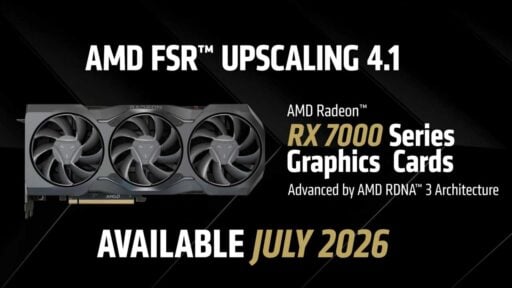
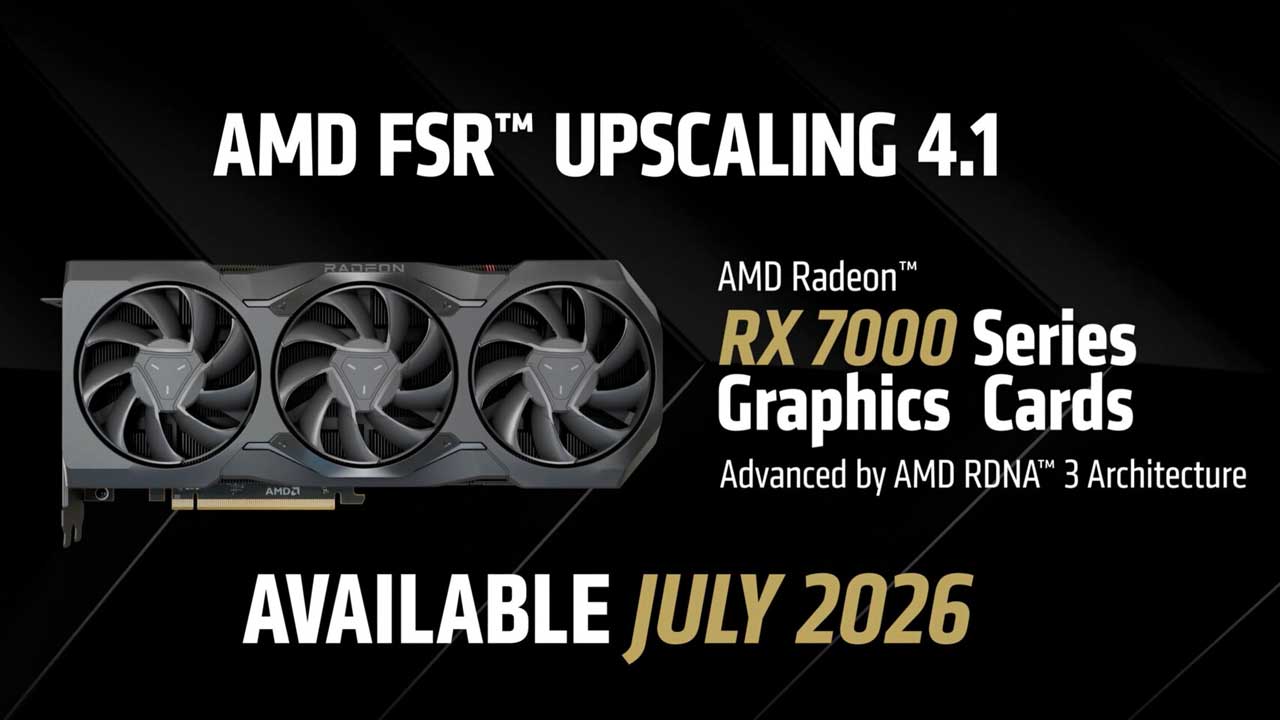
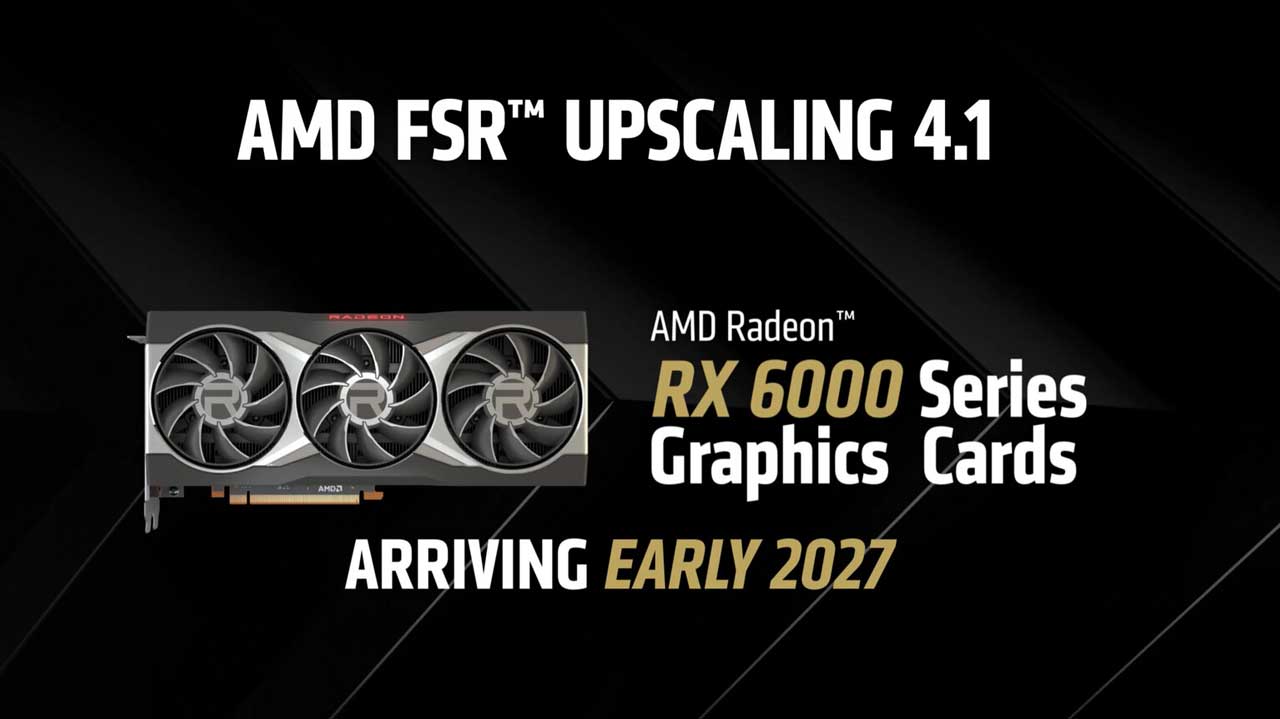
AMD has officially expanded FidelityFX Super Resolution (FSR) 4.1 to its Radeon RX 7000 and RX 6000 series graphics cards. The announcement clarifies that FSR 4.1 requires architectural optimization that AMD is still finalizing for older silicon:
- Radeon RX 7000 (RDNA 3): Support is scheduled for July 2026.
- Radeon RX 6000 (RDNA 2): Support is not expected until early 2027.
Until these dates, these cards remain on the FSR 3.1 branch.
FP8 vs. INT8
The delay stems from how FSR 4.1 was built. The model was natively designed for the FP8 (8-bit floating point) processing units found in the RDNA 4 architecture (RX 9000 series). Older cards lack these specific units.
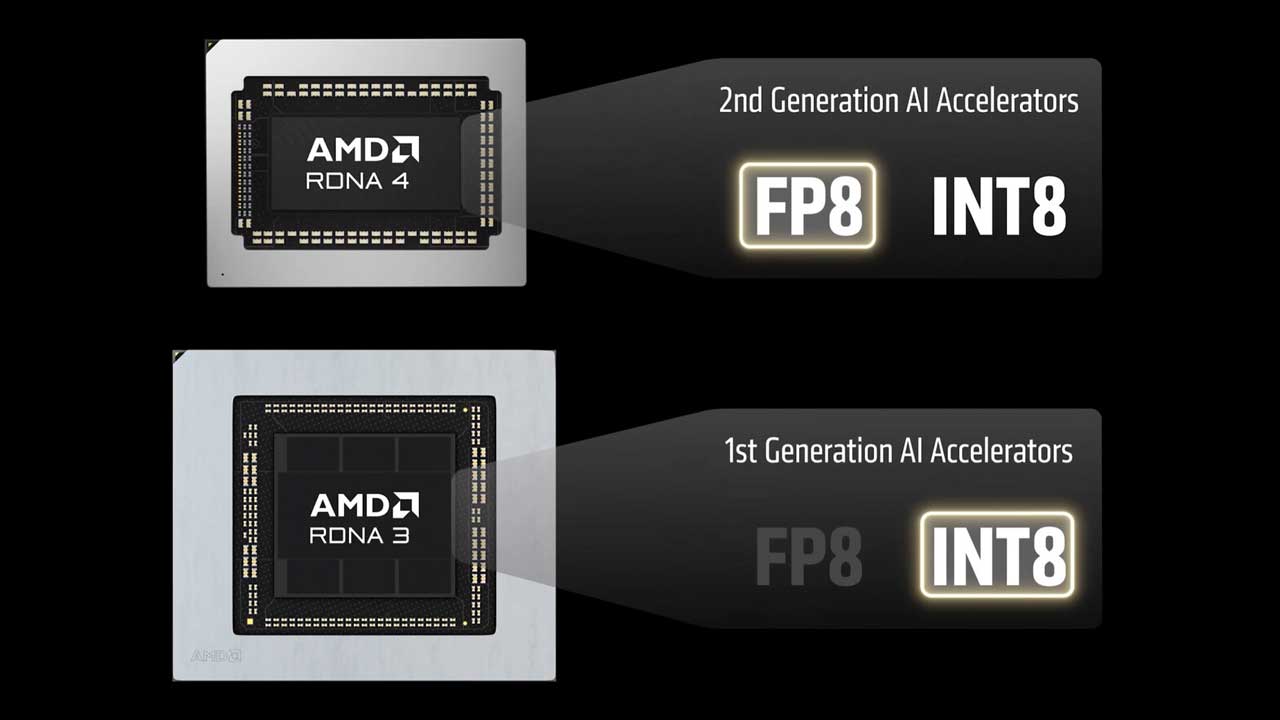
To bring the tech to the RX 7000 and 6000 series, AMD is re-tooling the machine learning model to run on INT8 (8-bit integer) logic. This ensures that FSR 4.1 doesn’t hurt frame rates on older compute units, but the porting process is the main reason for the months-long delay.
This decision comes after community backlash, with users noting that unofficial mods like OptiScaler have already managed to bring AI-style upscaling to older Radeon hardware. Even PlayStation’s own PSSR tech does this, leaving many puzzled as to why AMD still hasn’t implemented similar features on hardware as old as the PS5.
By establishing an official development path for PC gamers, AMD hopes to win them over, even if the solution arrives well after the technology’s initial debut.
Once the July update hits, RX 7000 users are expected to see the tech live in roughly 300 games immediately, effectively replacing the current temporal upscaler with the AI-reconstruction model.