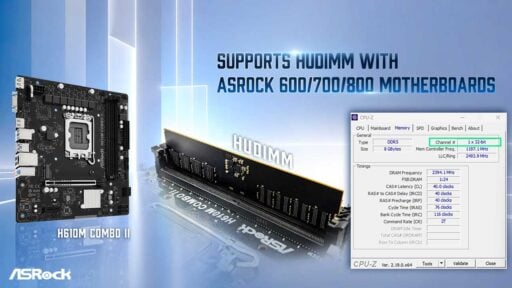
ASRock is moving to make DDR5 memory more accessible by introducing support for single sub-channel modules across its Intel motherboard lineup. The update covers the 600, 700, and 800-series chipsets, targeting a persistent pain point for budget-conscious builders: the high entry cost of current-generation memory.
Streamlined Architecture and Industry Collaboration
Standard DDR5 modules utilize a dual 32-bit sub-channel architecture. While efficient for high-capacity tasks, this design often requires more physical hardware than entry-level systems strictly need. By supporting a 1×32-bit “HUDIMM” configuration, ASRock and its manufacturing partner TEAMGROUP can cut the number of memory chips on a single stick in half.
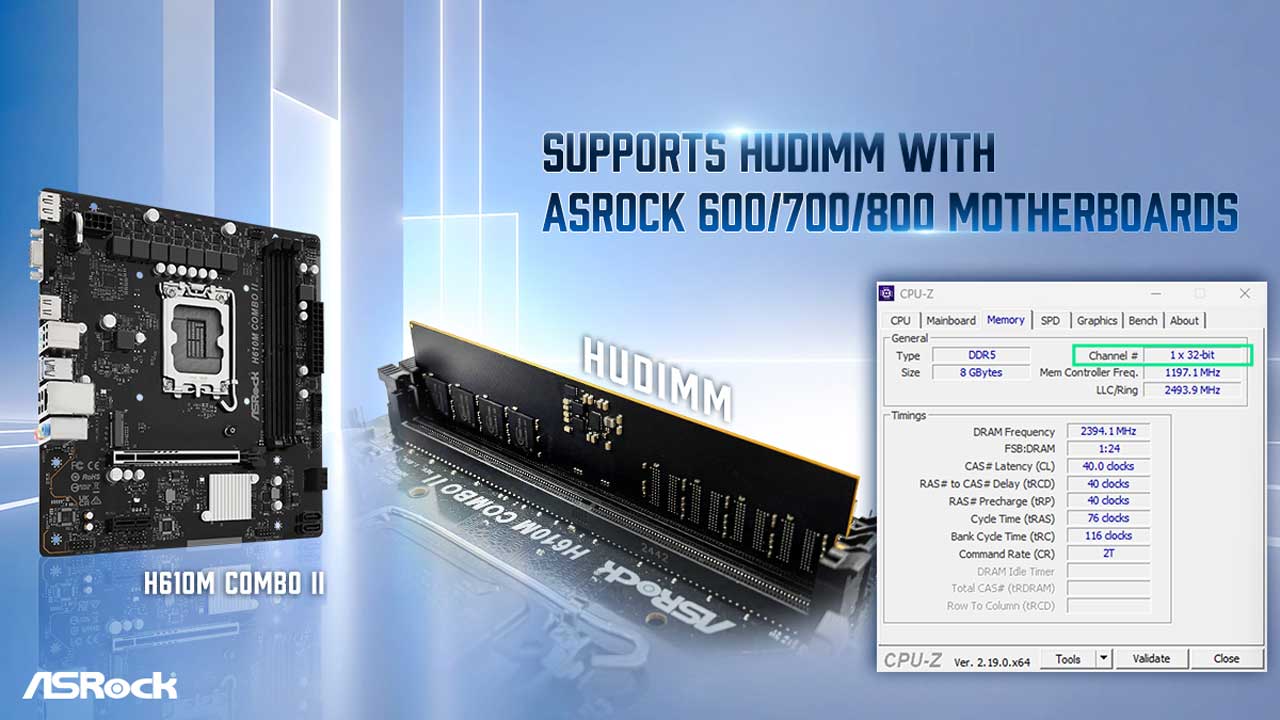
This patent-pending approach significantly lowers the manufacturing floor, allowing system integrators to offer DDR5 builds at prices more comparable to older DDR4 systems.
Performance Flexibility and Ecosystem Support
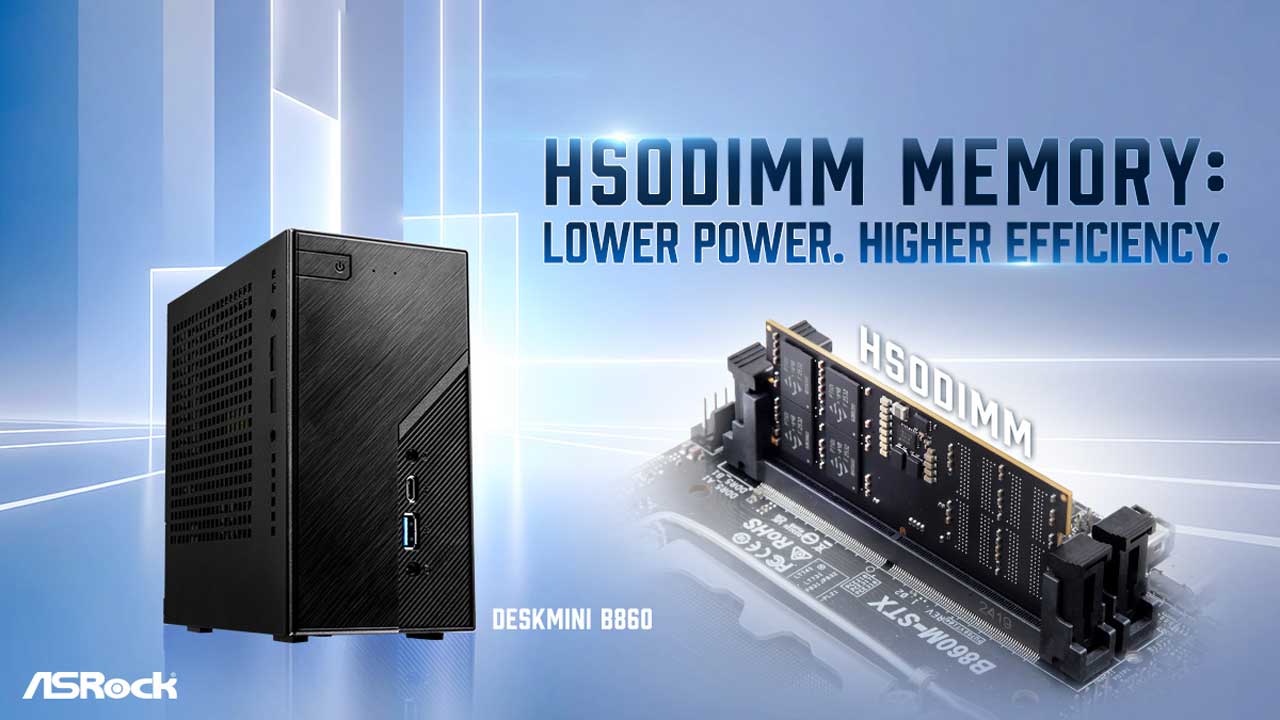
Intel has signaled strong support for the initiative. Robert Hallock, Intel’s VP of the Enthusiast Channel Segment, noted that these innovations are necessary to keep desktop computing accessible as the industry shifts away from older standards. The support isn’t limited to traditional mid-tower builds either; ASRock is extending the technology to its DeskMini series through the HSODIMM form factor, ensuring small-form-factor enthusiasts can also benefit from the reduced costs.
Beyond the price tag, the new support opens up interesting possibilities for memory configurations. ASRock highlighted that certain asymmetric pairings can actually lead to better performance. For example, on motherboards like the H610M COMBO II, combining an 8 GB single sub-channel module with a standard 16 GB dual sub-channel module can result in higher bandwidth and lower latency than using a single 24 GB module.
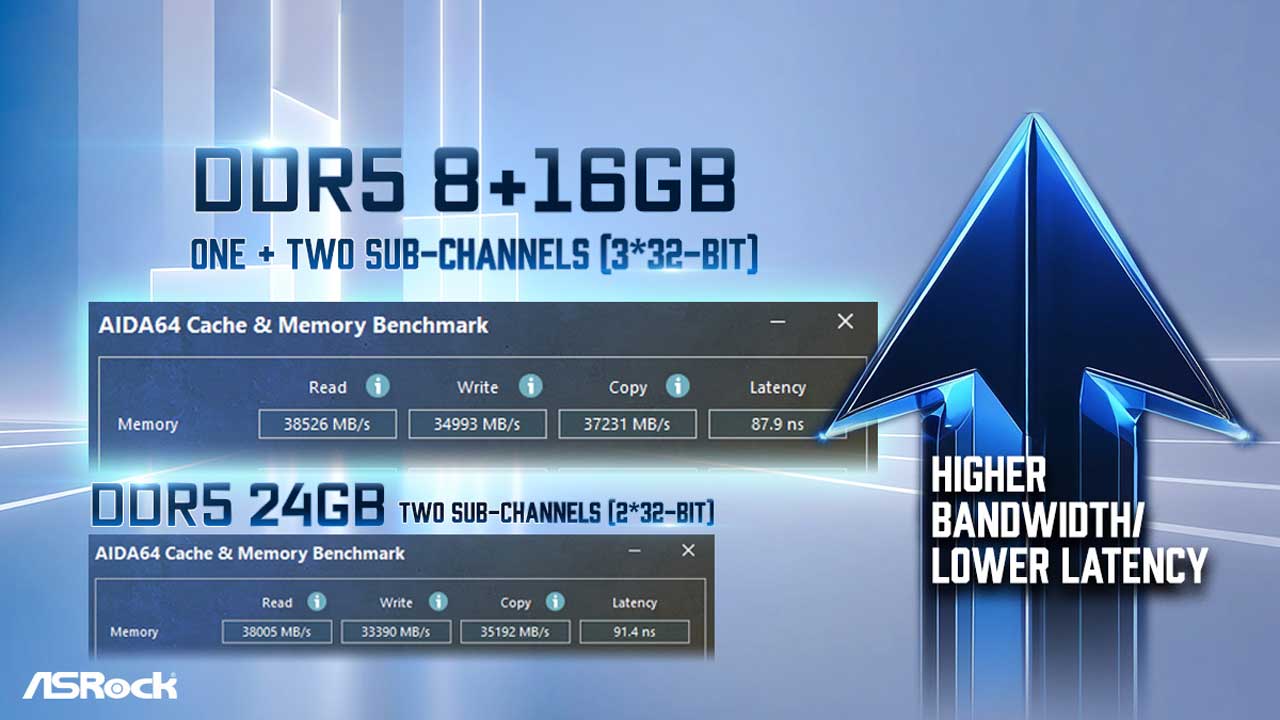
This flexibility allows users to mix and match hardware more effectively while maintaining a clear upgrade path.