For a long time, ASRock occupied a familiar corner of the Philippine PC market: the reliable, affordable motherboard option. It is the brand you pick when you wanted something solid without paying the premium of its bigger competitors. That reputation was earned, and it still holds. But if you’ve been paying attention lately, ASRock has been slowly becoming something much larger.
Graphics cards, power supply units, mini-desktops, monitors, and now, liquid coolers. ASRock has spent the last several years building out a full component ecosystem, and the cooling launch may be its most telling move yet.
Table of Contents:
From One-Trick Pony to Full Ecosystem
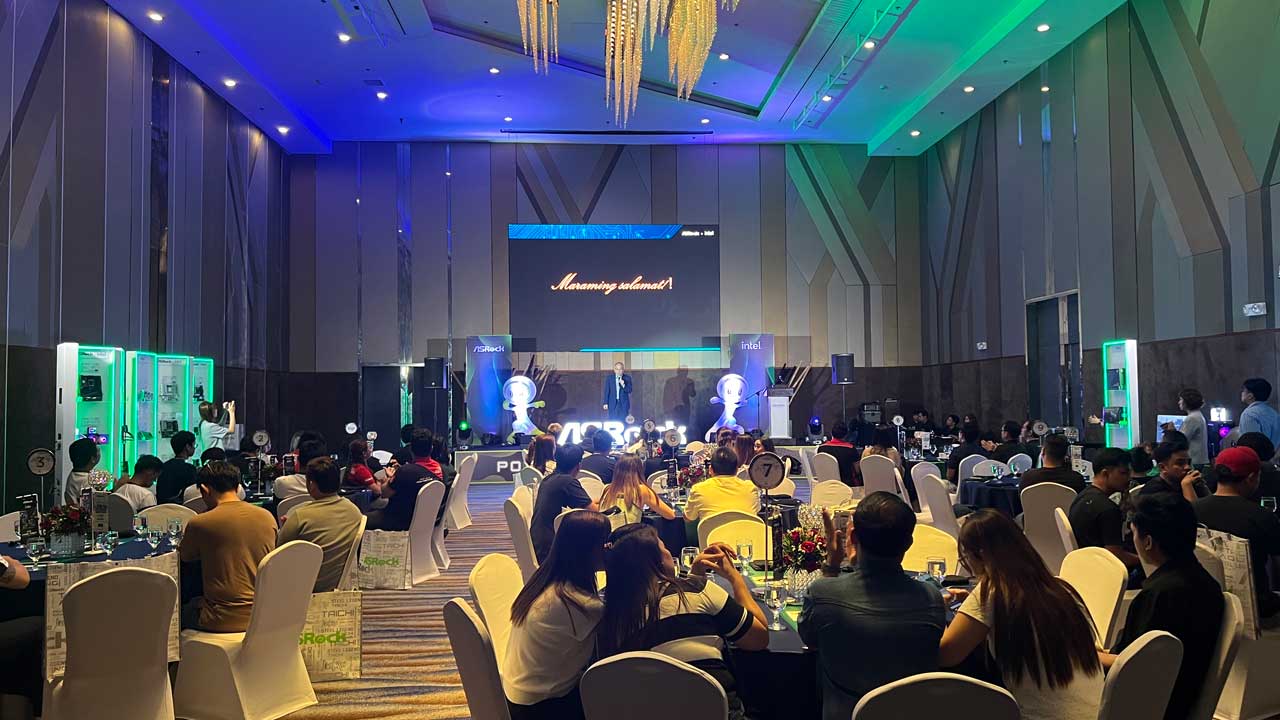
When ASRock representatives visited the Philippines recently for a media briefing with local tech outlets, the picture they painted wasn’t that of a motherboard company dabbling in new categories. It was a brand with a clear, deliberate roadmap.
“We have products for every end user’s requirement,” said Michael, ASRock’s regional executive. From the entry-level Challenger series to the flagship Taichi line, ASRock has spent years building vertical depth in its motherboard lineup. What’s changed is the horizontal expansion, and the strategy behind it.
The company describes its push into peripherals and components as completing the “ASRock ecosystem.” The logic is straightforward. If a builder already trusts ASRock for their board, why hand off their GPU, their PSU, or their cooling to another brand? The goal is to be the answer to every component question in a single build.
It’s a playbook other brands have run before. ASUS, MSI, and GIGABYTE have all crossed product category lines in both directions. But ASRock’s approach is notably self-aware. Asked about expanding into PC cases, for example, the team acknowledged the category is highly competitive with low barriers to entry, and opted to stay focused.
“We are not considering to go that field yet,” Michael noted. “We now focus on making our motherboard, VGA, mini systems, monitor, and PSU to become the main brand in the Philippines and other markets first.”
That kind of restraint is telling, but enclosures are definitely not out of the table.
Why Cooling? Why Now?
Of all the new categories ASRock could have entered, liquid cooling makes the most sense, and the team articulated exactly why.
“Cooling is not an option for our system. It’s a crucial, vital component at the platform level,” said Melissa, ASRock’s cooling product lead who brings nearly two decades of industry experience. “High-end CPUs really need a powerful and efficient cooling solution, and liquid is the best way to handle the massive heat, especially heat peaks.”
The timing is driven by the thermal reality of modern computing. As performance push processor TDPs higher, the gap between what air cooling can handle and what enthusiasts actually need has widened considerably. ASRock, having watched this trend from its seat as a long-standing platform partner for both chipmakers, decided the moment was right.
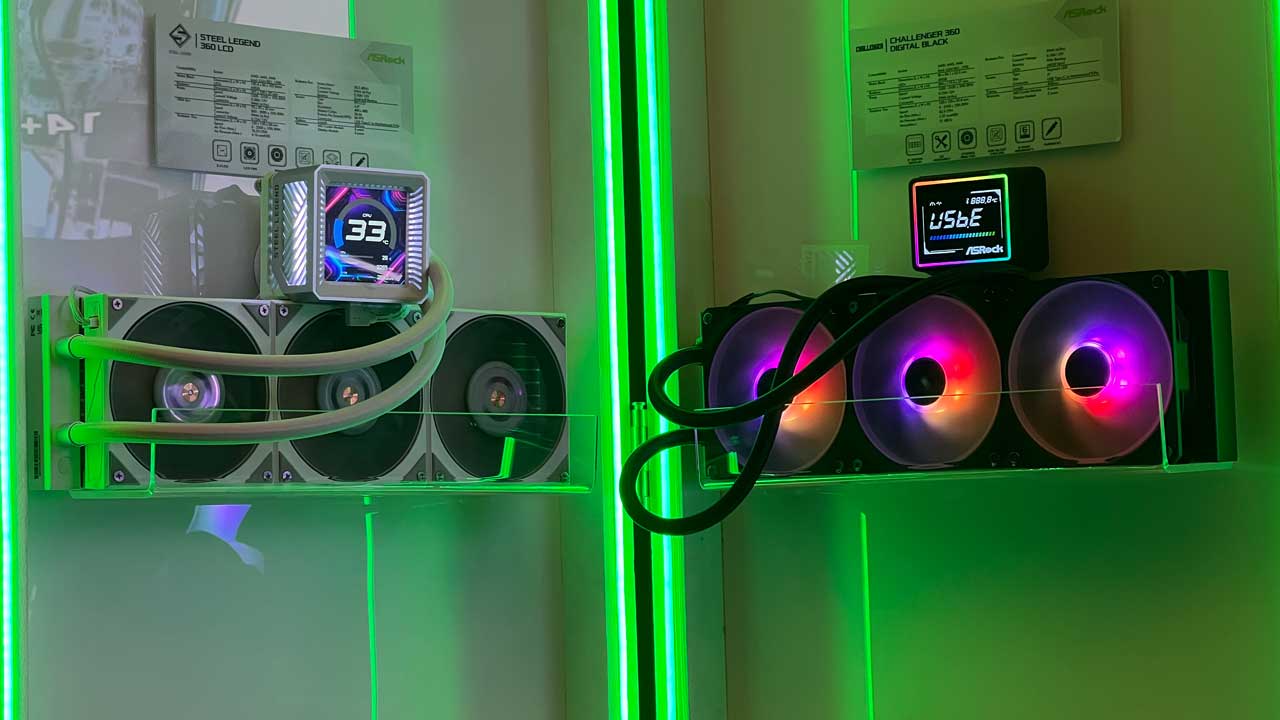
But entering a market already saturated with established cooling brands (Corsair, Noctua, be quiet!, DeepCool, and dozens of OEM-derived alternatives) is no small thing. The obvious question is: what makes ASRock’s coolers worth considering?
Engineering Cold Plate Fins From Scratch
The answer, at least in part, is a transfer of expertise from an unexpected source: GPU cooling.
ASRock has spent years engineering high-density thermal solutions for its graphics cards. Dense fin stacks, optimized airflow, precision fan tuning: these aren’t new problems for the company. What’s new is applying those learnings to liquid cooling cold plates.
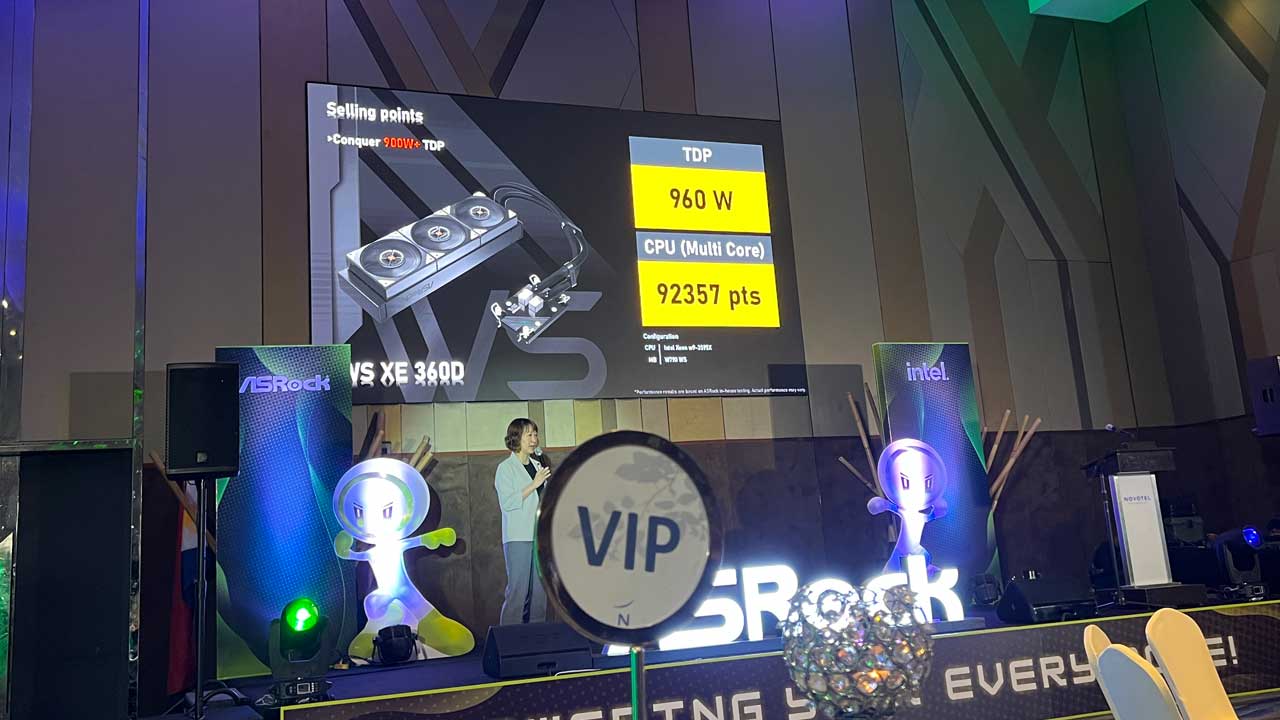
ASRock’s cold plate fins come in at 0.08 mm, a notably tight fin pitch that reflects serious engineering investment. Thinner fins mean more surface area for heat transfer, but they also mean more resistance, more noise, and more engineering complexity. Getting the balance right requires simulation, iteration, and the kind of manufacturing precision that most newcomers simply don’t have access to.
“We bring a lot of experience from our VGA technology and use it for coolers,” Melissa explained. The same philosophy extends to the radiator fin spacing, which ASRock has tuned to 0.1 mm, tighter than typical in the market, optimized for a balance between maximum cooling area and minimized airflow resistance. The fans themselves are original designs, built to move strong lateral airflow through that denser radiator without generating excessive noise.
This is co-development with a manufacturing partner, not a badge job. The distinction between both matters.
Six-Year Warranty, Even at Entry Level
The other differentiator ASRock is leaning into is warranty length, and the scope of that commitment is worth noting.
Six years of warranty coverage on their liquid coolers, including entry-level models. For comparison, many competitors offer two to three years on budget AIOs, with longer coverage reserved for premium lines. ASRock’s decision to extend the same warranty floor to its entire cooling lineup is a statement of confidence in their build quality.
It’s consistent with a broader shift in how the brand operates. Motherboard warranties have increased. PSUs use Japanese capacitors and carry 10-year coverage on select PSU models. The through-line is a company that wants customers to buy once and not worry, and is willing to put a promise behind that position.
“We build good products, we use good components,” Michael said. “We are confident in our product quality. Therefore, we can offer a 10-year warranty on select PSU models and six years warranty for the whole cooler product line.”
An Honest Assessment of the Road Ahead
ASRock’s cooling launch isn’t without its challenges. The market is crowded, price competition is fierce, and brand recognition in the cooling space doesn’t transfer automatically from motherboards. The team acknowledged this plainly: “It’s really a tough market.”

For now, air cooling isn’t on the immediate roadmap. ASRock sees liquid as the space where it can bring the most differentiated technology. Air cooler work may happen through partner arrangements for specific projects, but a mainstream ASRock air cooler isn’t coming soon.
The Philippines remains a critical market in this push. ASRock considers it the second-largest market in Southeast Asia by total available volume, behind Vietnam, and the team has been investing in distribution and retail channel depth to match that priority. As Filipino builders spend more on their setups and expectations for component quality and after-sales support continue to rise, ASRock’s timing, arriving with a more complete lineup and more serious engineering ambitions, looks well-considered.
The brand that was “pretty solid for the price” is becoming something else. Whether it fully earns its place among the enthusiast-tier names will depend on how the cooling products perform in the real world. But the foundation (the technology, the warranty commitment, the ecosystem logic) is more credible than many expected.
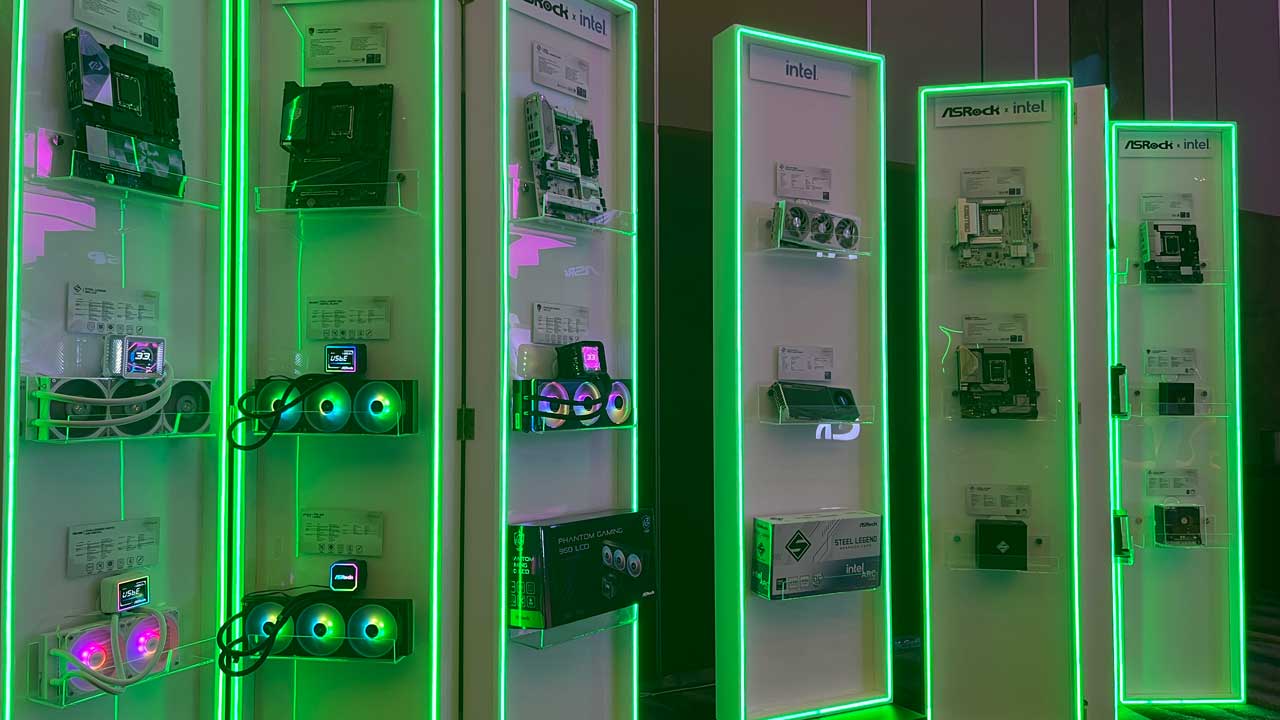
ASRock’s liquid cooling lineup was previewed during a Philippine media briefing ahead of COMPUTEX.