NVIDIA has announced DLSS 4.5 Ray Reconstruction, the latest addition to its growing suite of AI-powered rendering technologies.
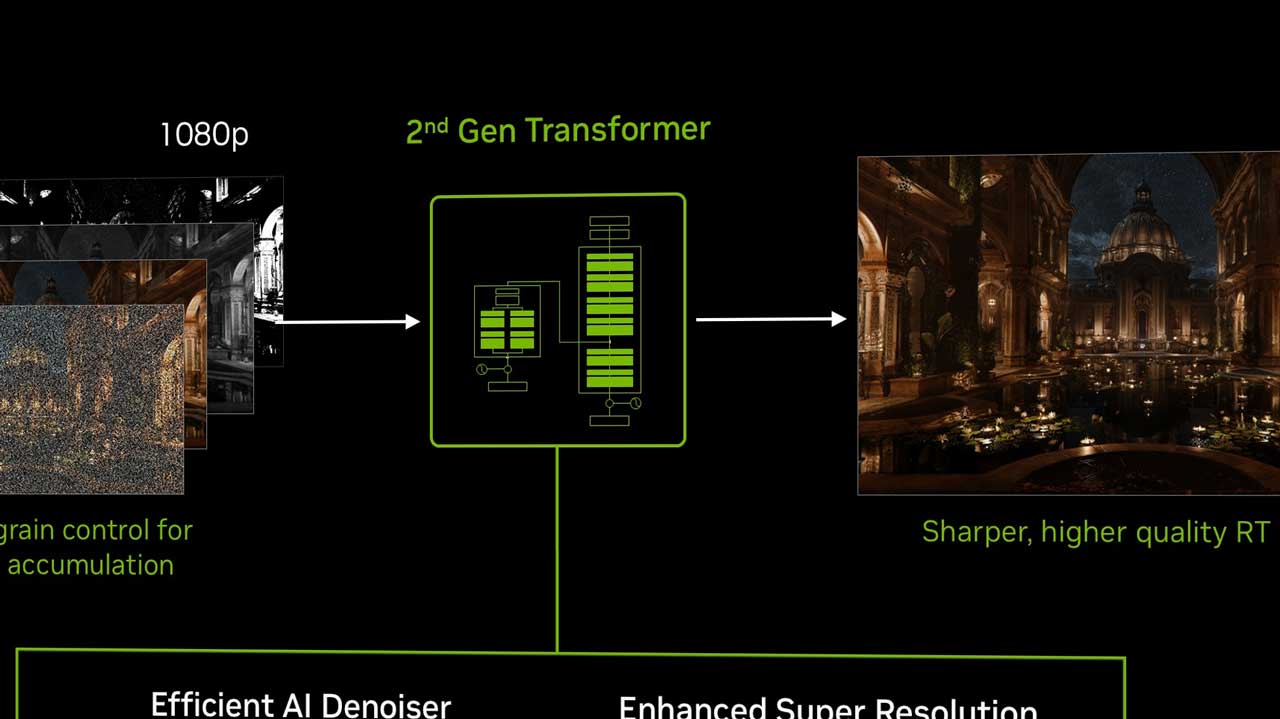
The new feature introduces a second-generation transformer model designed to significantly raise image quality in ray-traced and path-traced games.
What’s New in DLSS 4.5 Ray Reconstruction
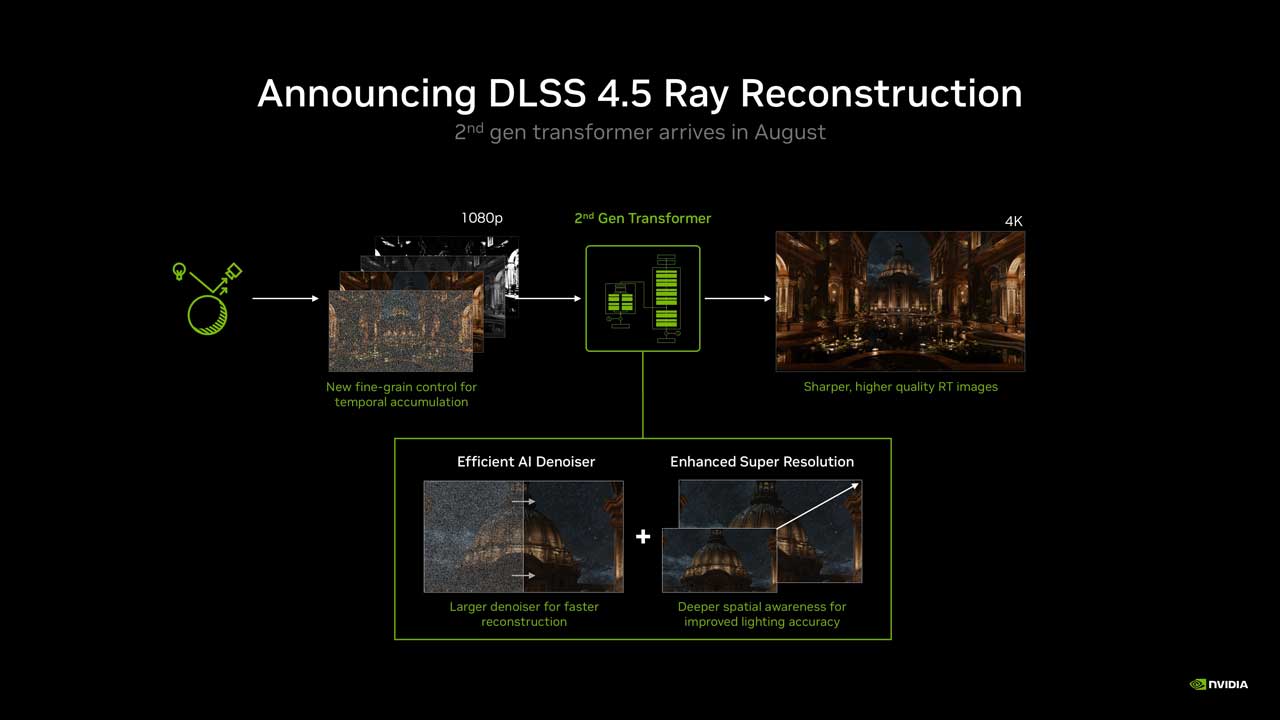
The updated model brings four key improvements over its predecessor:
Stronger compute performance
The new denoiser delivers 35% more compute capability and handles 20% more parameters with performance overhead comparable to the previous version.
Smarter image reconstruction
Building on the Super Resolution advances already seen in DLSS 4.5, the model gains deeper spatial awareness and makes better use of game engine pixel sampling and motion data. The practical result is more accurate lighting, steadier visuals over time, and cleaner motion in ray-traced content.
Broader training data
A larger training dataset gives the model a stronger foundation for reconstructing scenes closer to ground truth, helping it make better decisions about which engine data to draw from.
Greater developer control
Developers now have finer-grained tuning options for temporal accumulation, allowing more precise adjustments to model behavior for game-specific image quality needs.
Blender Integration
Beyond gaming, DLSS 4.5 Ray Reconstruction is also coming to Blender Cycles as a new denoiser option which expands on an earlier OptiX integration.
For 3D artists who need to interact with a scene while viewing near-final render quality, the technology stands to meaningfully streamline lighting and look-development workflows. The update is expected to ship with Blender 5.3 this fall.
RTX Ecosystem Milestone
The announcement coincides with a broader milestone for NVIDIA’s RTX platform, which now counts over 1,000 games and applications supporting RTX features.
The DLSS 4.5 Ray Reconstruction is set to arrive this August.