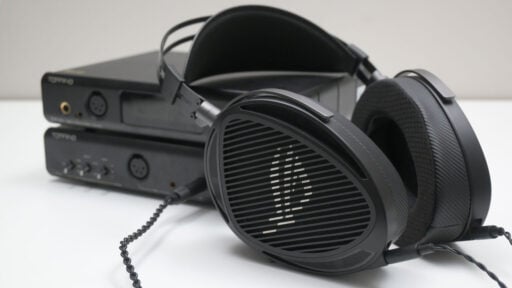
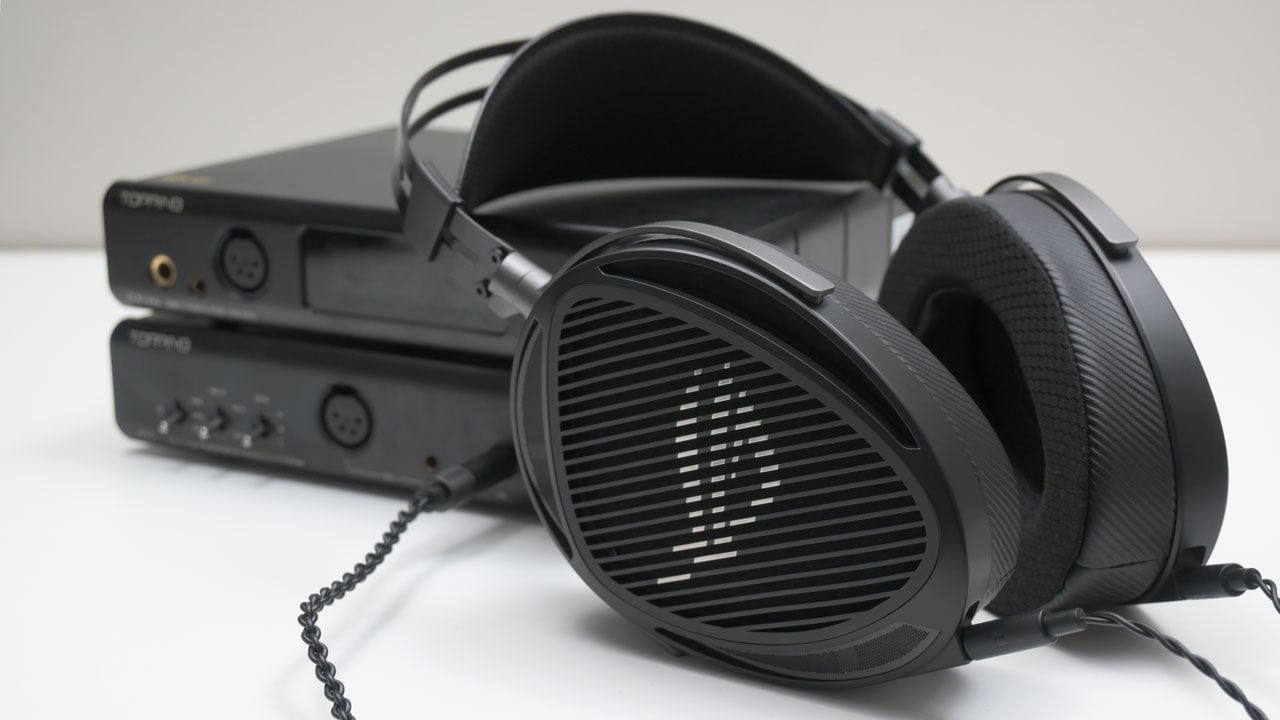
We’ve seen “planar” gaming sets before, but the ROG Kithara marks the first time a mainstream gaming giant has tapped the specific expertise of HIFIMAN to build a driver from the ground up. Featuring massive 100 mm ROG-tuned drivers and an open-back architecture, the Kithara ignores the modern trend of wireless convenience in favor of raw, wired performance. Today, we’re testing whether this $299 experiment is a genuine audiophile bargain or simply a gaming headset trying to borrow hi-fi prestige.
Disclosure: The ASUS ROG Kithara was provided by ASUS for the purposes of this review. All opinions expressed in this article are entirely my own and were developed through independent testing. ASUS had no editorial input into this review, nor did they see its contents prior to publication.
Table of Contents:
Technical Specifications
The core of the ROG Kithara is its massive 100 mm planar magnetic drivers, which utilize HIFIMAN’s patented Stealth Magnet technology. Unlike standard dynamic drivers that push air from a central point, these planar drivers move a thin-film diaphragm uniformly across its entire surface.
| Earphones | |
|---|---|
| Transducer | 100 mm Planar Magnetic |
| Frequency Response | 8 Hz – 55 kHz |
| Impedance | 16 Ω |
| Sensitivity | 94 dB/mW (est. driver) |
| THD | < 0.1% |
| Connectivity | 4.4mm Balanced, 6.3mm & 3.5mm SE, USB-C |
| Microphone | |
| Transducer | Full-band MEMS |
| Polar Pattern | Unidirectional (Super-cardioid) |
| Frequency Response | 20 Hz – 20 kHz |
| Sensitivity | -36 ±3 dB |
| Dimensions | |
| Length | 104 |
| Width | 156 |
| Height | 260 |
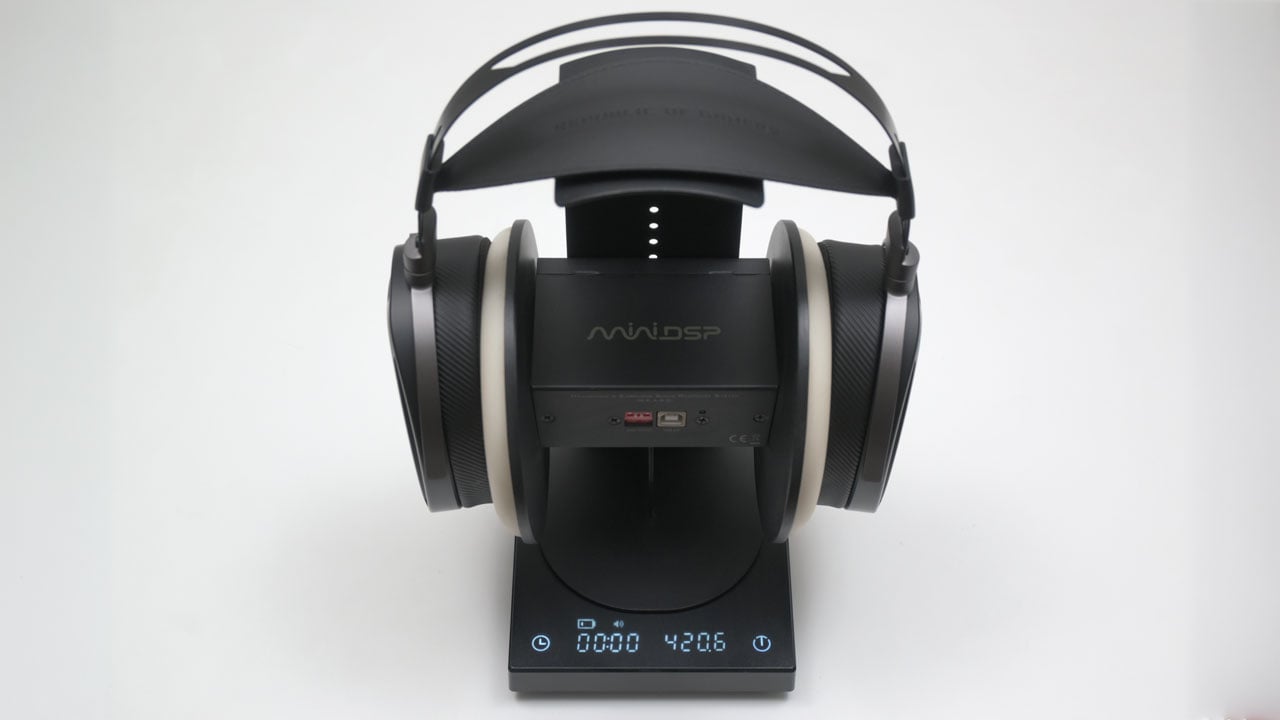
| Weight | 420 g (without cable) |
Packaging and Accessories
The ASUS ROG Kithara arrives in packaging that feels distinctly HIFIMAN-esque, though it naturally carries the expected ROG colorway and the associated premium presentation.
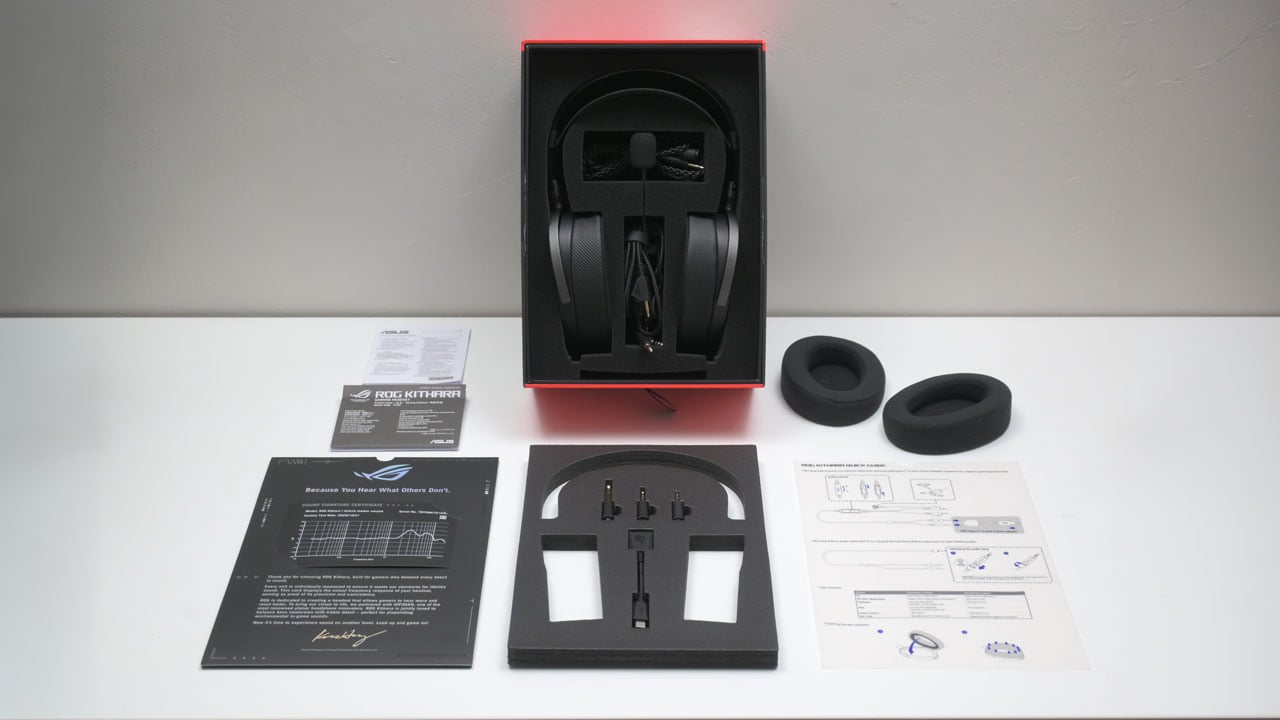
Scope of delivery are as follows:
- ASUS ROG Kithara Planar Magnetic Gaming Headset
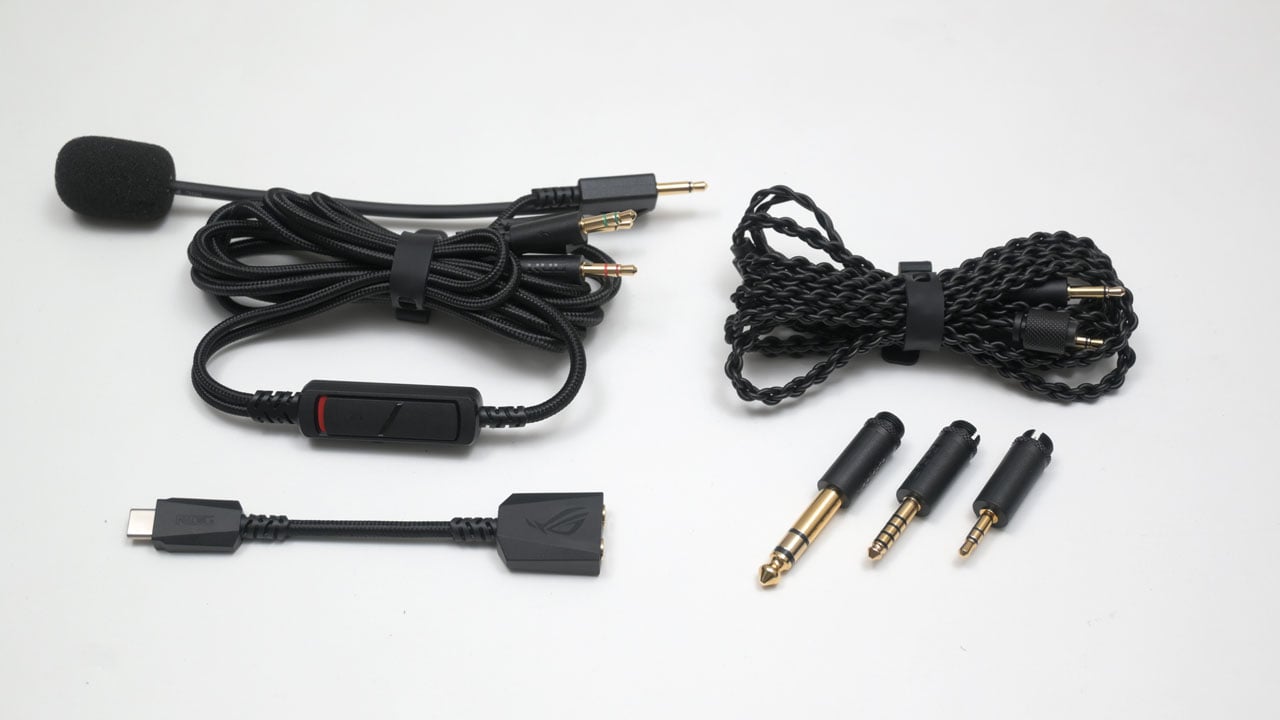
- 1.8 m Dual-3.5 mm to Dual-3.5 mm Boom Mic Cable
- 1.8 m Dual-3.5 mm with 3-in-1 plug cable
- 3.5 mm adapter
- 6.35 mm single-ended adapter
- 4.4 mm balanced adapter
- USB-C to Dual-3.5mm Adapter
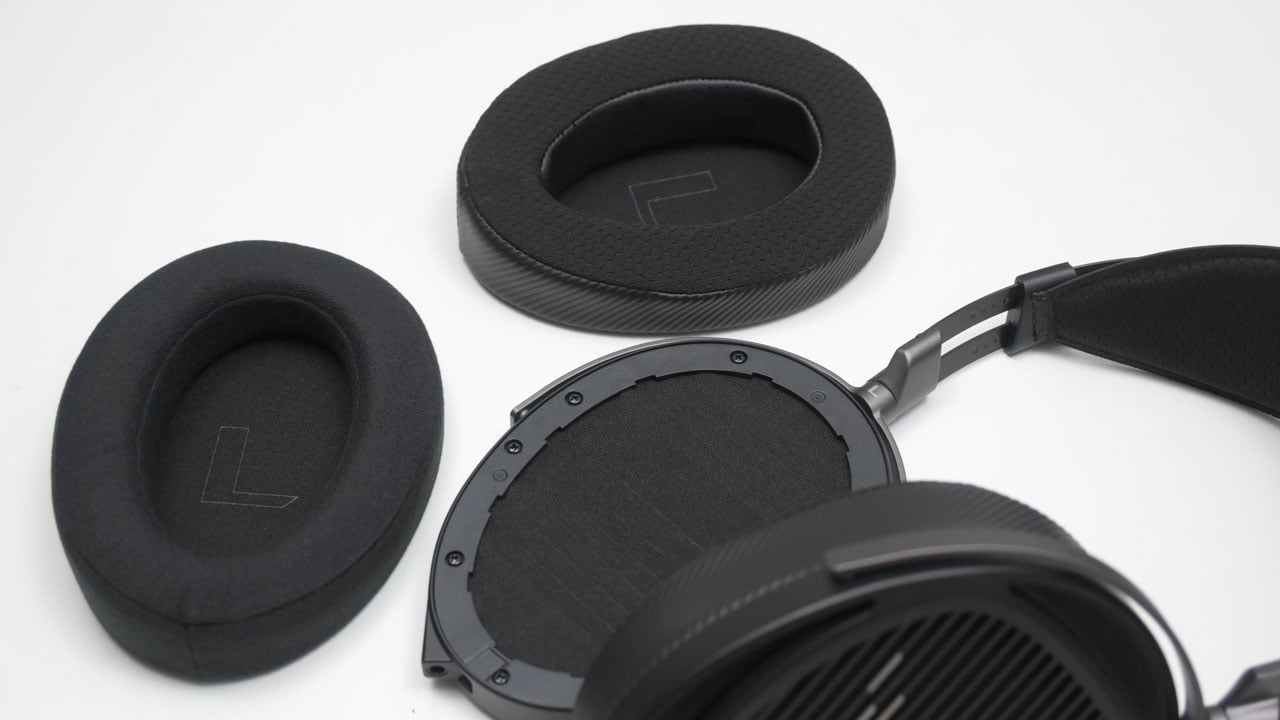
- 2x Velour Pads
- 2x Leatherette with Mesh Fabric (installed)
- Frequency Response Measurement Card
- Warranty Booklet
- Quick Start Guide
Design, Build and Connectivity
Drawing from the high-fidelity pedigree of the HIFIMAN Arya V3, the ASUS ROG Kithara utilizes the unmistakable egg-shaped open-back design that has become a benchmark for planar magnetic headphones. While the driver assembly and acoustic chamber reflect HIFIMAN’s engineering, ASUS has customized the external housing to align with the ROG design language. This integration merges audiophile-grade ergonomics with a rugged, gamer-centric aesthetic, featuring reinforced structural elements and distinctive ROG branding without compromising the specialized airflow required for the large-format planar transducers.
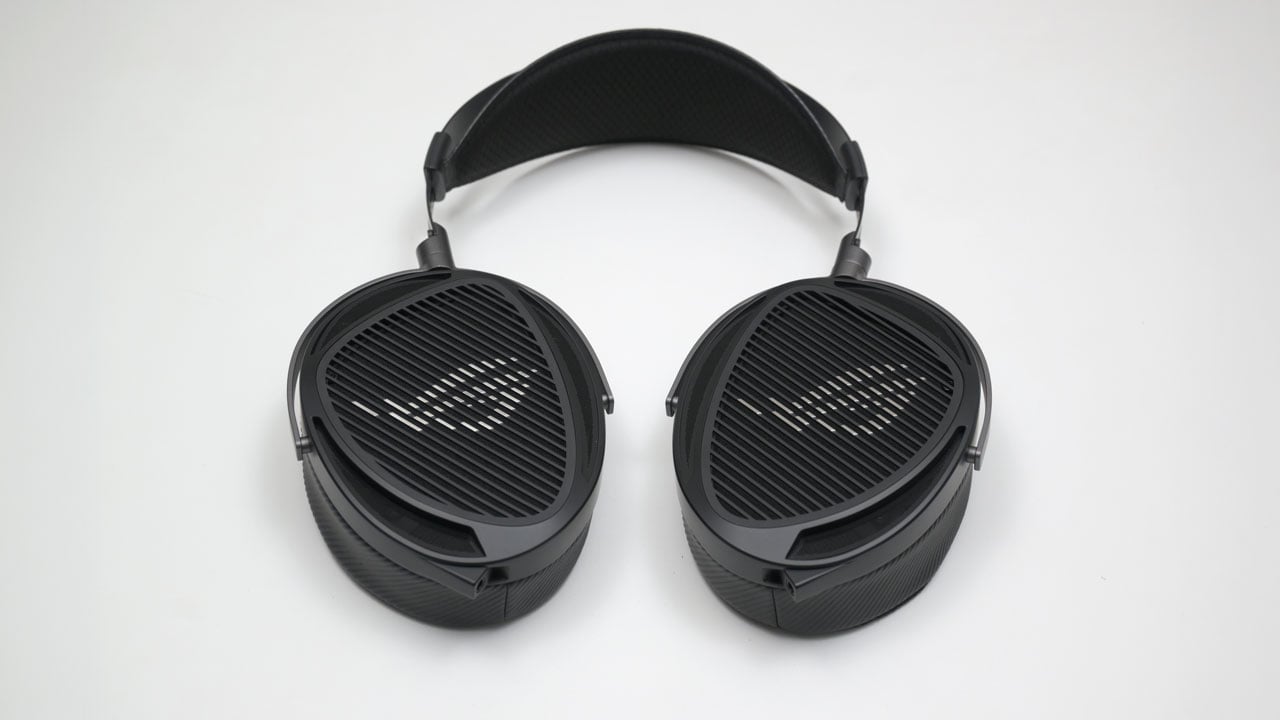
Having owned several HIFIMAN flagships, I can confidently say that the ROG Kithara represents a significant step up in build quality. The construction feels substantially more refined, boasting tighter tolerances and superior materials. A major pain point for me with HIFIMAN has always been their headband design; by contrast, the Kithara’s headband is far more robust. I don’t have to worry about parts getting scratched or, worse, accidentally snapping something off during daily use.
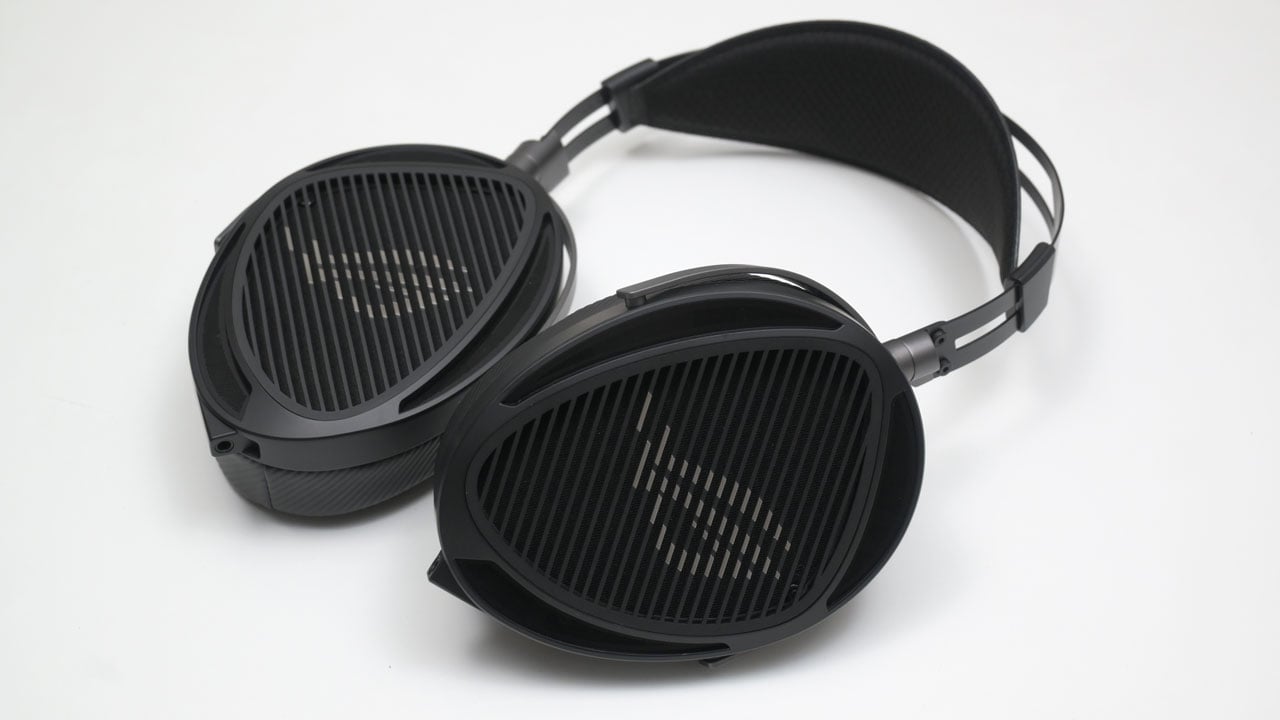
The ROG Kithara uses a proprietary 10-pin layout, making it incompatible with 9-pin Arya/Edition XS or 12-pin Ananda BT pads. However, it includes two high-quality alternatives: a leatherette and a velour set that surpass HIFIMAN’s stock UltraPad and VelPad in build while offering distinct comfort and sound signature.
Connectivity on the ROG Kithara is impressively versatile. ASUS provides two primary cables: a sleeved headset cable featuring an integrated MEMS microphone and a high-quality braided cable that uses a proprietary mini 4-pin XLR-style connector. For high-fidelity setups, you can swap between the included 6.35 mm and 3.5 mm single-ended adapters or utilize the 4.4 mm balanced adapter for compatible DACs and amplifiers. Additionally, the included USB Type-C dongle works seamlessly with both cables and delivers surprisingly good output for a portable solution.
Ergonomics
Weighing in at approximately 420 grams, the ASUS ROG Kithara sits right in the middle ground for a premium headset. However, comfort is defined by more than just mass as it’s also about distribution and support. Thanks to its wide adjustable headband, large coupler design, and acceptable clamping force, the Kithara manages its weight flawlessly for a balanced, secure fit.
The velour pads win on comfort due to their breathability, but the leatherette pads are my top choice for their sound profile. I’ll break down those sonic differences in the next part of this review. Now, regardless of which material you prefer, both sets of pads provide a solid seal and are perfectly glass-friendly, so you won’t have to worry about messing the frequency response or dealing with discomfort if you’re wearing frames.
Frequency Response
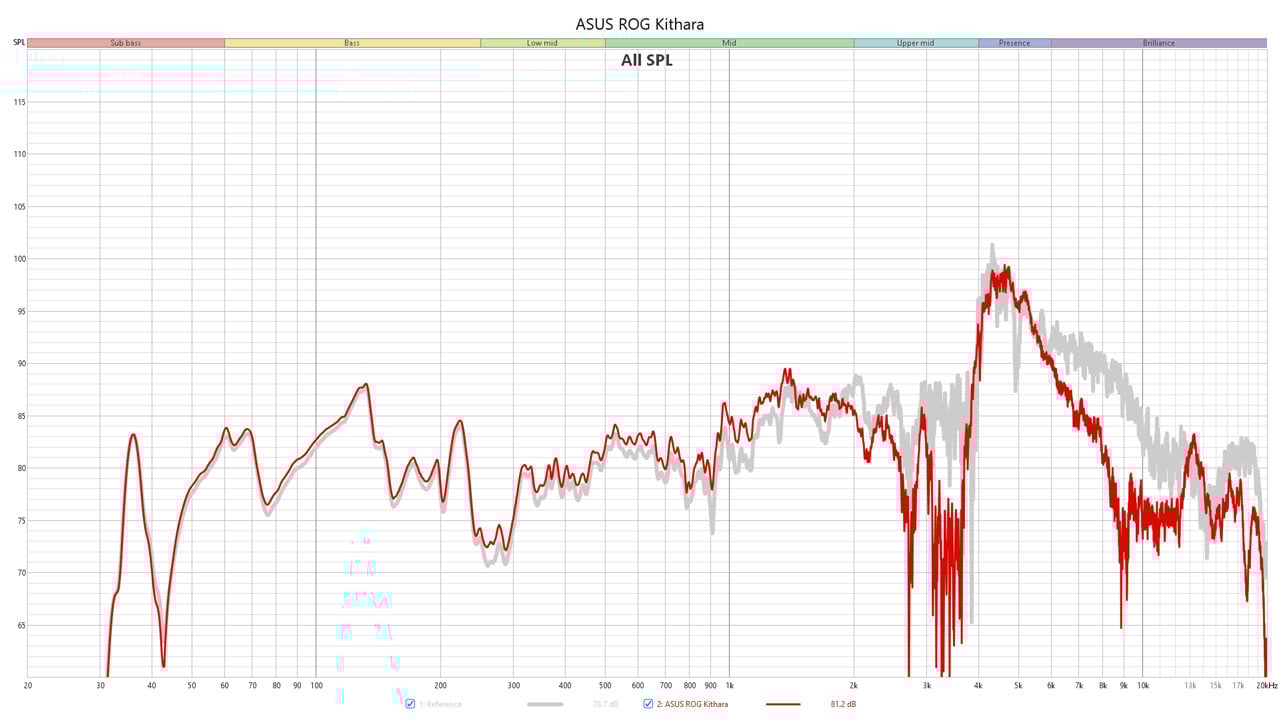
Pad swapping is one of the most effective ways to tune a headphone’s acoustics without resorting to EQ, and the frequency response for the ROG Kithara reveals dramatic shifts in character, particularly in the midrange. While both the leatherette (Blue) and velour (Red) pads share a nearly identical bass response from 20 Hz up to 500 Hz, their response diverge sharply from there.
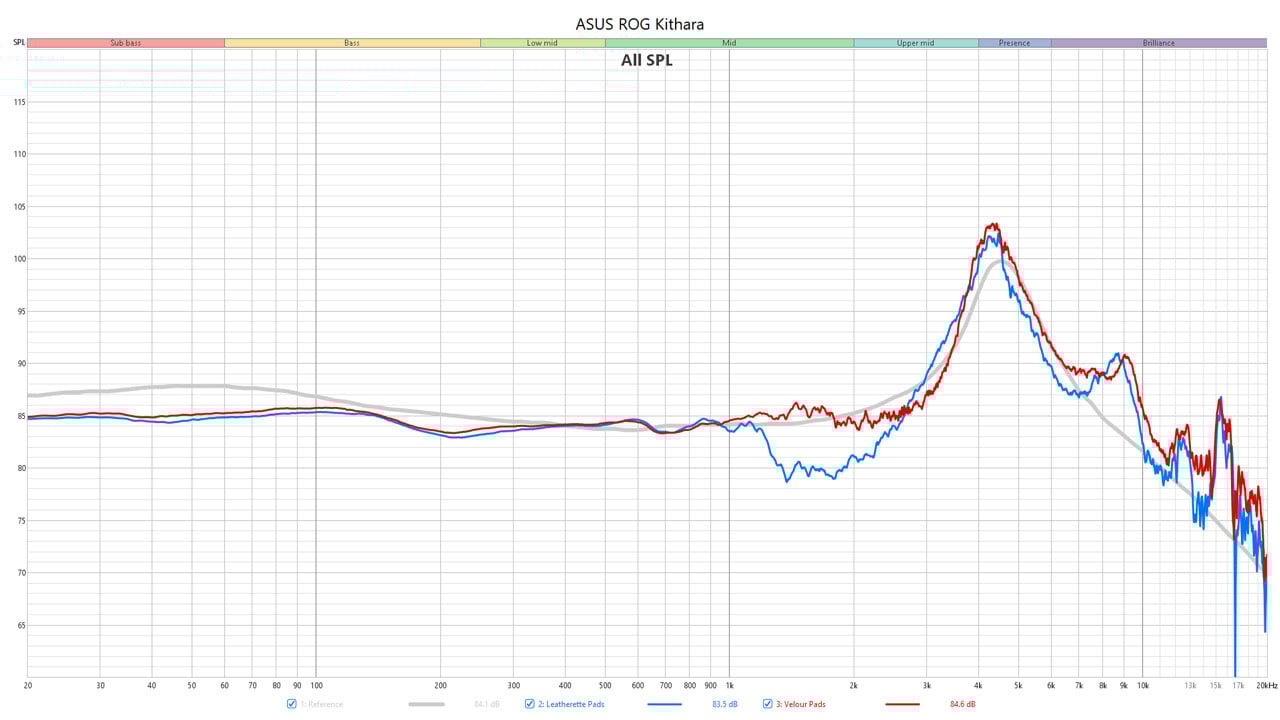
Technically speaking, the velour pads are the superior choice for acoustic accuracy, as they provide a much more linear frequency response through the vocal range. However, the leatherette pads offer a distinct dip in the midrange that offers a sense of “grandeur” in the presentation. This spacious mid-range character is a hallmark of the HIFIMAN planar magnetic signature – an airy experience that I find much more pleasing for personal listening.
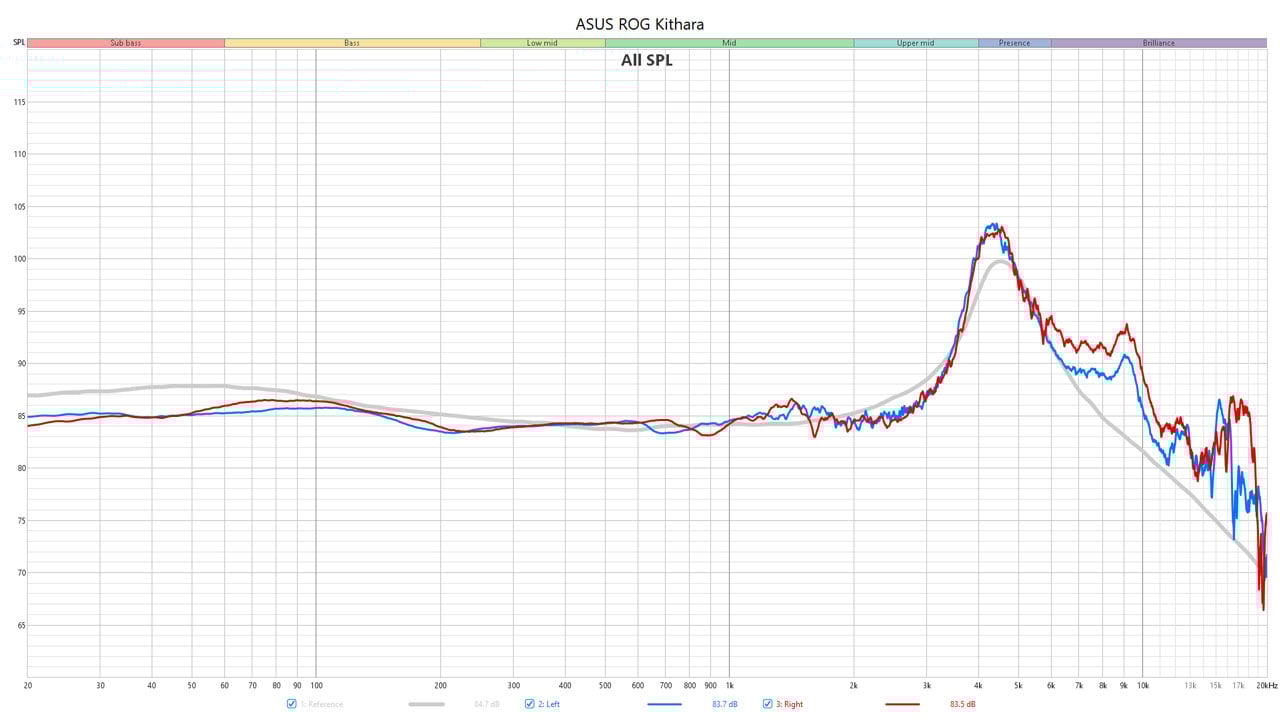
The left and right channels are virtually identical across the audible spectrum, resulting in a near-perfectly superimposed frequency response. This level of consistency is critical for achieving the precise imaging necessary to accurately place sound cues in games, movies, and music.
Bass
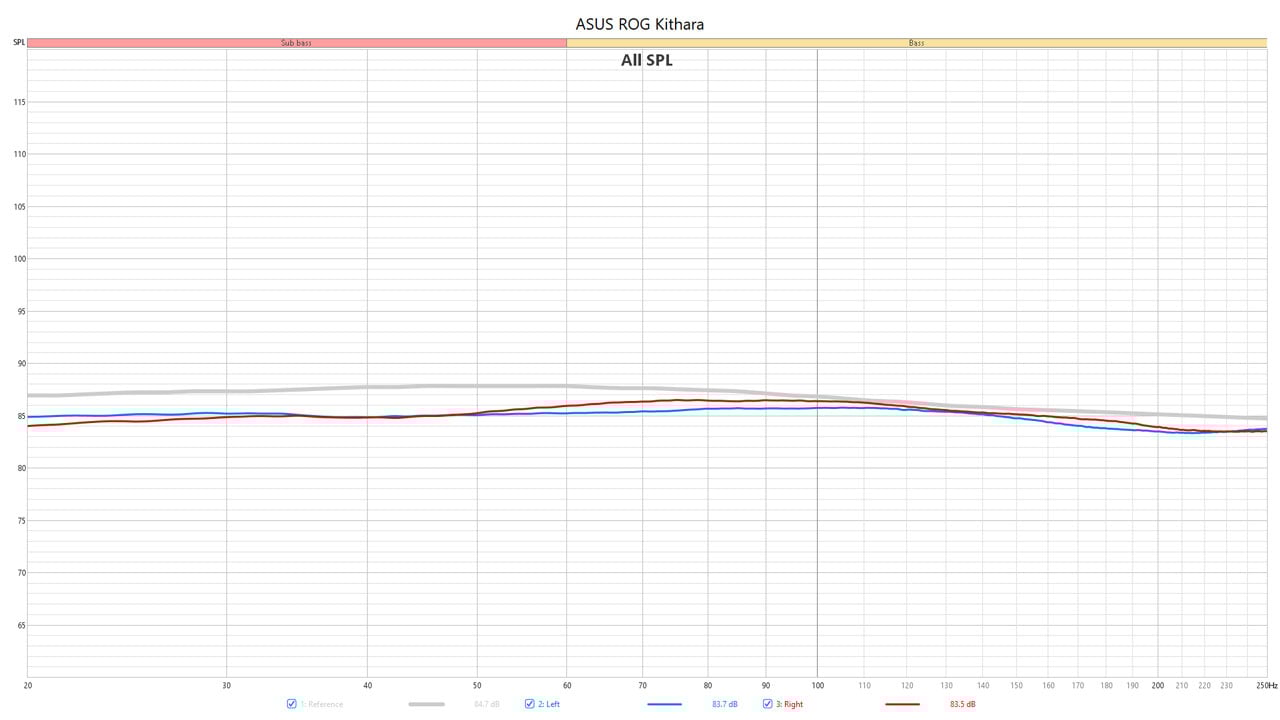
For those used to the fun V-shaped sound of mainstream gaming headsets, this bass response might initially feel light. However, for critical listening or competitive gaming, this large planar magnetic headphone offers a level of depth and control that normal dynamic drivers cannot easily achieve. It mirrors that HIFIMAN transparency I enjoy, providing a foundation that is felt through its depth rather than its volume alone. For a quick comparison with other planar magnetic headphones, I still prefer the slam of the HIFIMAN HE6se V2, but I do prefer the ROG Kithara in this range over the HIFIMAN Arya V3.
Midrange
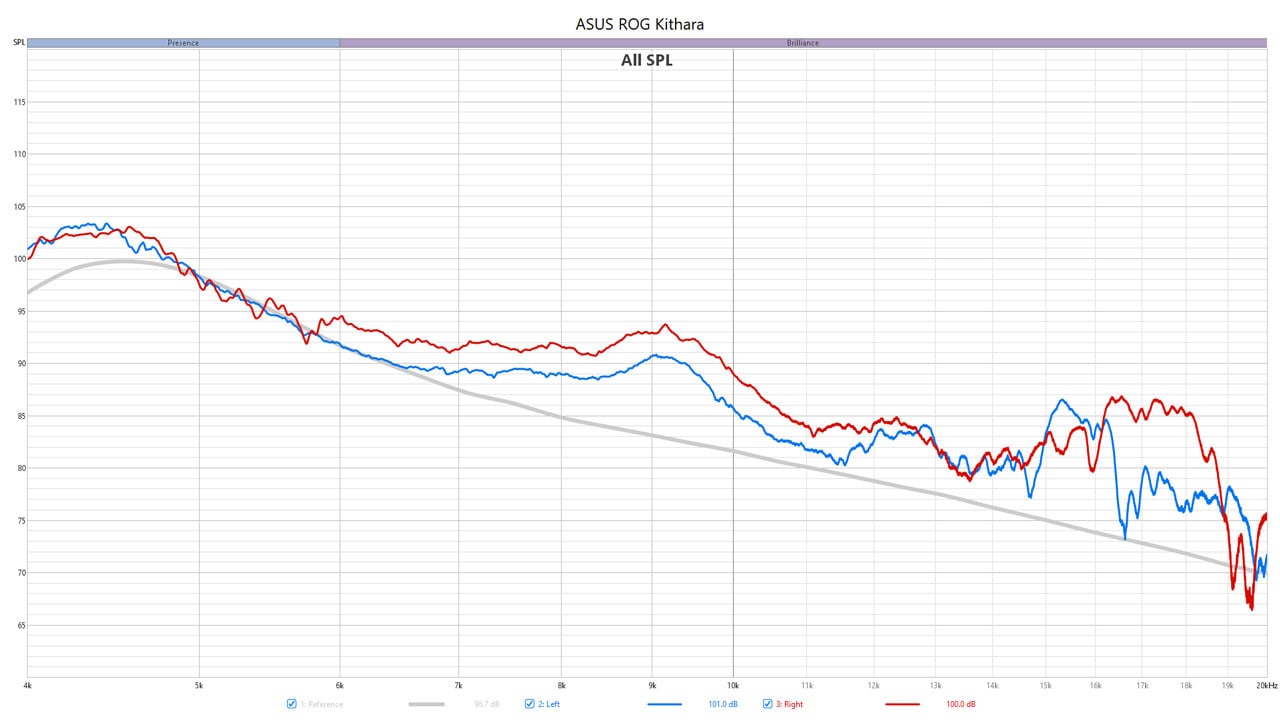
The ROG Kithara with its velour pads offers a reference midrange that stays flat and honest until the upper-mids, where it ramps up significantly to emphasize detail and presence. However, because the slope is quite aggressive toward the 4 kHz mark, instruments like snare drums or high-register female vocals may sound very forward or energetic. For those who find that much energy a bit fatiguing, the leatherette pads are the superior alternative. They balance out those aggressive peaks, shifting the ROG Kithara towards a more laidback and spacious presentation that is easier on the ears during longer listening sessions.

Treble
Treble performance emphasizes clarity and detail, though its presence may feel bright or sharp to some, especially if you are not familiar with how planar magnetic driver sounds. For such a design, this profile works as planar magnetics are typically fast enough to handle these peaks without creating the lingering energy that often leads to a harsher output.
Distortion
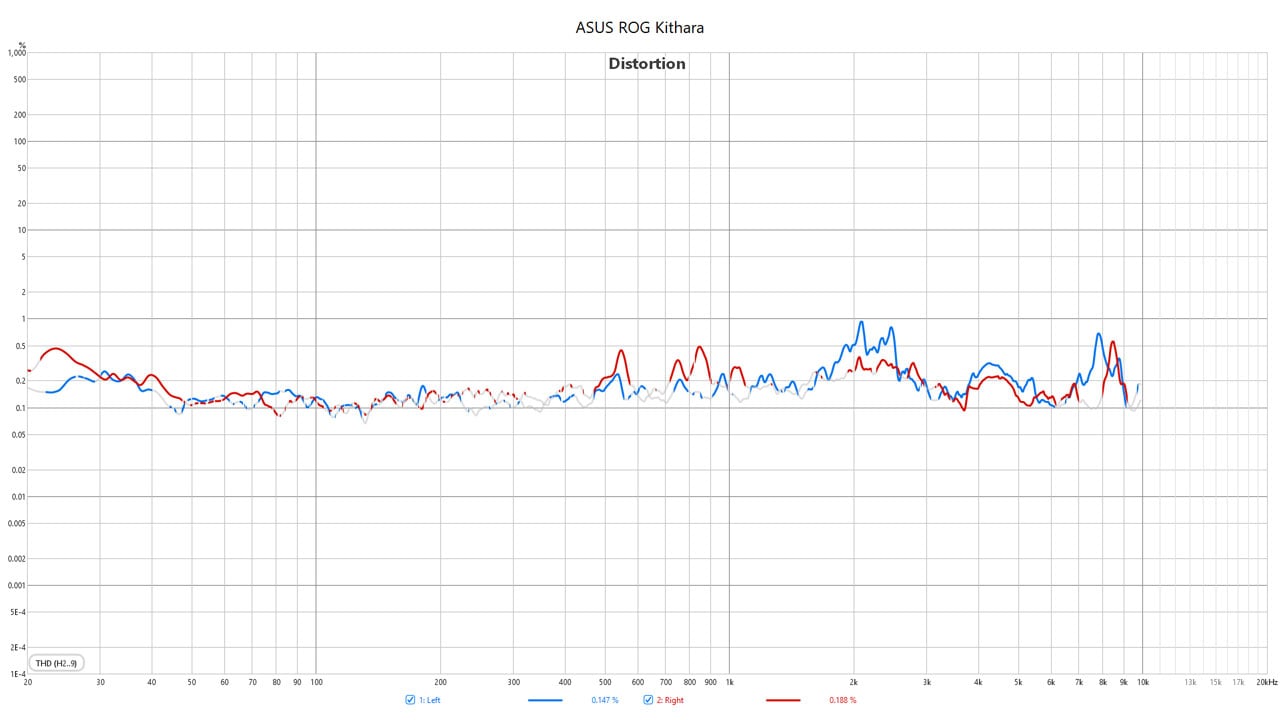
The ROG Kithara exhibits a remarkably clean Total Harmonic Distortion (THD) profile, consistently staying below 1% across the entire frequency spectrum. For a massive 100 mm planar magnetic driver, this level of control provides a significant headroom to push the volume or apply an aggressive amount of EQ.
CSD
Overall, the ROG Kithara displays a clean decay profile, especially in the lower and middle frequencies. The ridges (resonances) drop off sharply within the first 1-2 milliseconds, translating to a fast transient response.

Noise Isolation
While the ROG Kithara offers a hint of noise isolation at the treble region, its open-back design allows sound to leak inside and out. On that note, you’ll find the audio experience much more rewarding in a quiet environment where there’s no background noise to compete with.
Microphone
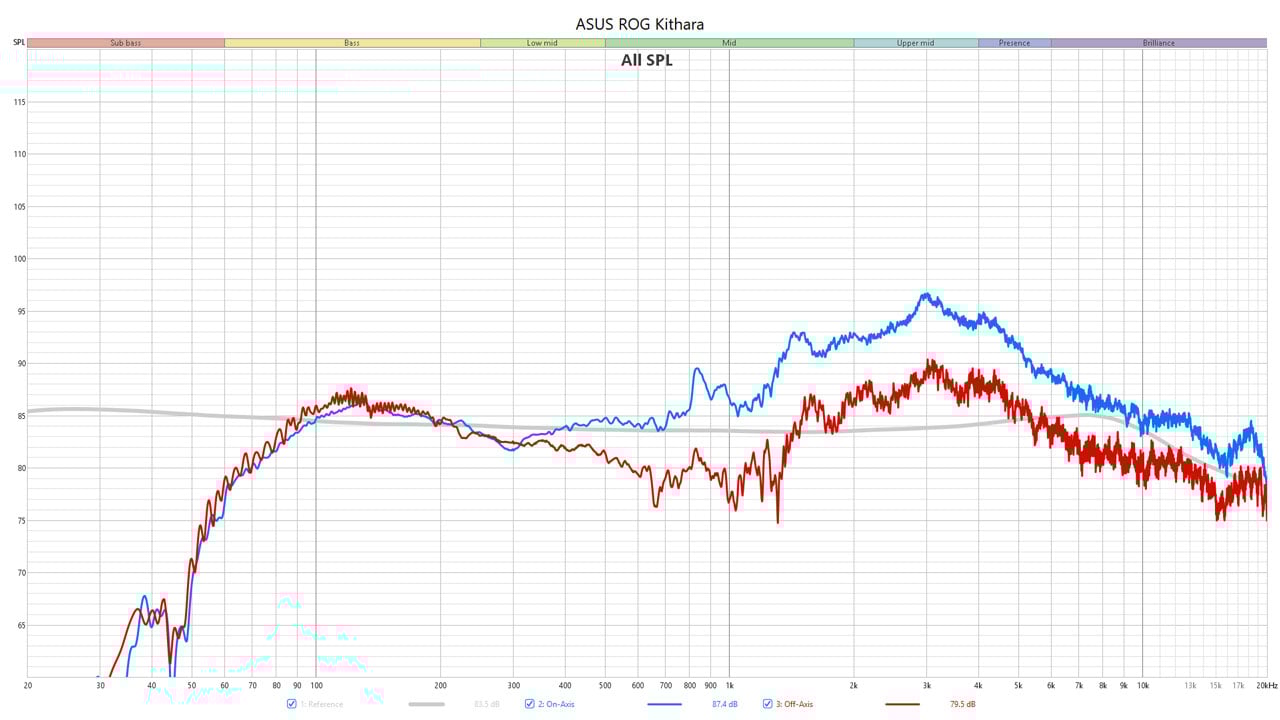
The ROG Kithara’s microphone performance is somewhat of a head-scratcher. While decent enough in its default position, the performance improves dramatically when rotated 180º off-axis. Why this isn’t the stock configuration is anyone’s guess, making it the most puzzling aspect of the headset.
Final Thoughts
The ASUS ROG Kithara is a well-executed collaboration between giant brands. By partnering with HIFIMAN, ASUS hasn’t just slapped a gaming logo on an audiophile product; they have genuinely bridged the gap between high-fidelity audio and the specific demands of the gaming market. It is a legitimate piece of audiophile gear that just happens to have a microphone attached.
At $299, the Kithara is aggressively positioned. It delivers the hallmark planar magnetic traits with lightning-fast transients, expansive soundstage, and incredibly low distortion typically found in headphones costing significantly more. The collaboration actually improves upon what it is based on in many ways. For an instance, its build quality is undeniably more robust than HIFIMAN’s usual fare, addressing long-standing concerns about durability and mechanical tolerance.
Sonic performance is where the Kithara truly shines, provided you understand what you are buying. This is not a bass-heavy, rumble-focused headset. Instead, it offers a level of depth, separation, and precision that dynamic drivers struggle to match. The ability to tune the sound via the included velour and leatherette pads adds a layer of versatility that serves both the analytical listener and the immersion-seeker. The massive, well-tuned 100 mm drivers also provide ample headroom for EQ, making this a DIYer’s dream.
However, the ROG Kithara is not without its quirks. The open-back design means it is better suited for low noise environments, and the bizarre microphone orientation is a baffling oversight in an otherwise polished package. To add, the proprietary pad mounting system limits aftermarket customization options.
Ultimately, the ROG Kithara is a standout experiment that succeeds. It offers a clear upgrade path for gamers ready to graduate from consumer headsets to something offering genuine clarity and resolution. If you have a quiet room and a decent amp (or are willing to use the surprisingly capable USB dongle), the ROG Kithara is arguably one of the best value propositions currently available in the planar magnetic market, gaming or otherwise.
ASUS ROG Kithara $299

Product Name: ROG Kithara
Product Description: The ASUS ROG Kithara is a collaboration between gaming giant ASUS and high-fidelity audio leader HIFIMAN, bringing true audiophile performance to the gaming space.
Brand: ASUS
Summary
The ASUS ROG Kithara is a successful crossover. It brings the technical prowess of HIFIMAN’s planar technology to a wider audience while fixing the structural weaknesses often associated with the former. It is a legitimate audiophile bargain disguised as a gaming headset.
Pros
- Genuine audiophile-grade planar sound with excellent imaging and separation
- A distinct improvement over typical HIFIMAN structural quality
- Includes a comprehensive suite of cables and a surprisingly good USB-C DAC
- Distinct sonic profiles offered by the included high-quality leatherette and velour pads
- Extremely competitive performance for the $299 price point
- Efficient enough to be driven by almost anything
Cons
- Microphone offers better off-axis performance over stock
- Non-standard mounting limits third-party replacement options