In this review, we’re putting the nubia V80 Design to the test. Aimed at the value-conscious consumer, the V80 combines a familiar design language with surprisingly generous storage. It’s available in two main flavors – 4 GB + 256 GB and 8 GB + 256 GB – each featuring its own distinct color palette.
Disclosure: nubia provided the V80 Design for this review. They had no editorial input into this content, and all opinions expressed are entirely my own.
Table of Contents:
Technical Specifications
Despite its budget positioning, the nubia V80 Design doesn’t hold back on specs. It balances a slim 7.7 mm profile with a substantial 5,000 mAh battery and a smooth 120 Hz refresh rate on its large 6.75-inch panel. Rounding out the hardware is an AI-driven triple-camera system and versatile charging capabilities, including 22.5 W wired and 10 W reverse charging. It’s worth mentioning that the V80 Design is also known as the ZTE Blade V80 Design in other regions.
| Processor | |
|---|---|
| CPU | 8-core (2x Cortex-A75 + 6x Cortex-A55) |
| Chipset | Unisoc T7280 |
| Memory | |
| Capacity | 8 GB LPDDR4X |
| Graphics | |
| GPU | ARM Mali-G57 |
| Display | |
| Size | 6.75 inches |
| Resolution | 900 x 1940 (9:19.5) |
| Refresh Rate | 120 Hz |
| Response Time | N/A |
| Camera | |
| Front | 16 MP f/2.4 |
| Rear | 50 MP f/1.8 |
| Storage | |
| Slot | 2x Nano-SIM, microSDXC |
| Capacity | 256 GB (Internal) |
| Connectivity | |
| Cellular | GSM, HSPA, LTE (4G) |
| Wi-Fi | 802.11 ac, Dual-band |
| Bluetooth | Bluetooth 5.2 |
| USB | USB Type-C 2.0, OTG |
| Audio | |
| Speaker | 2x Speakers |
| Jack | 3.5 mm TRRS |
| Power | |
| Battery | 5000 mAh |
| Charging | 22.5 W in, 10 W out |
| Dimensions | |
| Length | 166 mm |
| Width | 7.1 mm |
| Height | 79 mm |
| Weight | 191 grams |
Packaging and Accessories
The nubia V80 Design comes in your typical smartphone packaging.
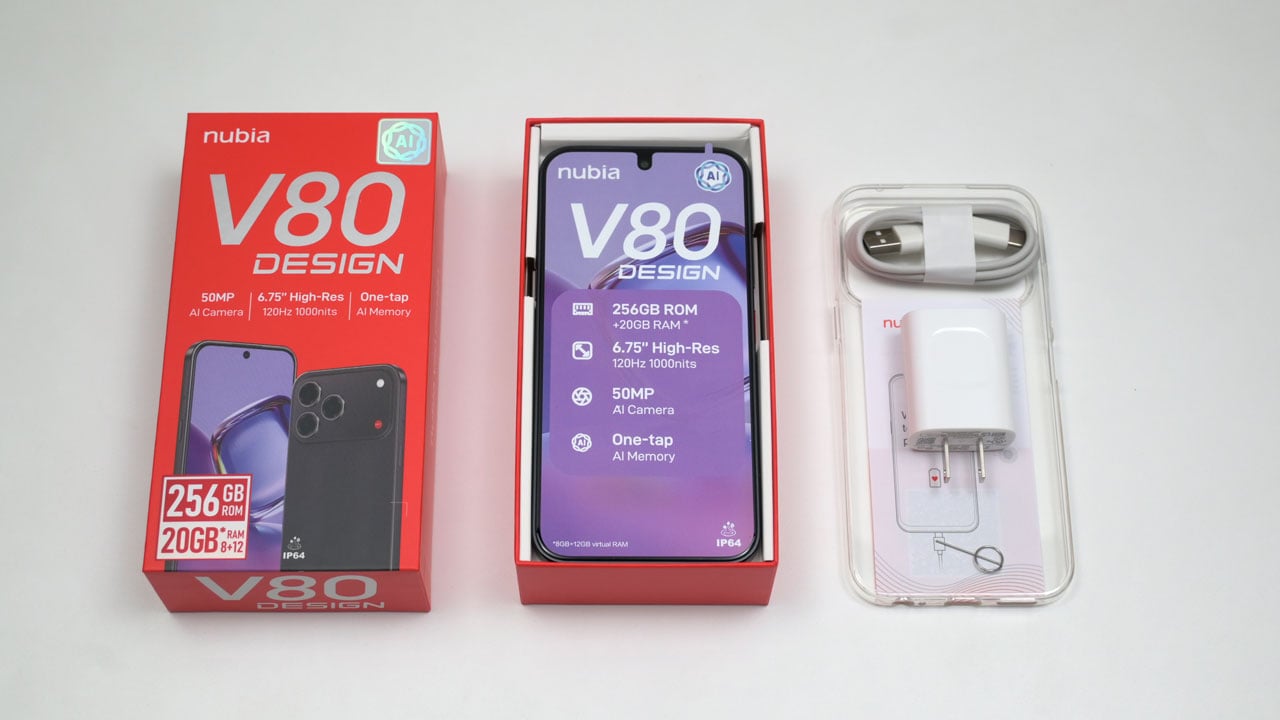
Scope of delivery are as follows:
- nubia V80 Design smartphone
- Clear case
- Charger
- USB Type-C to Type-A cable
- SIM card remover
- Documentation(s)
Design, Build and Connectivity
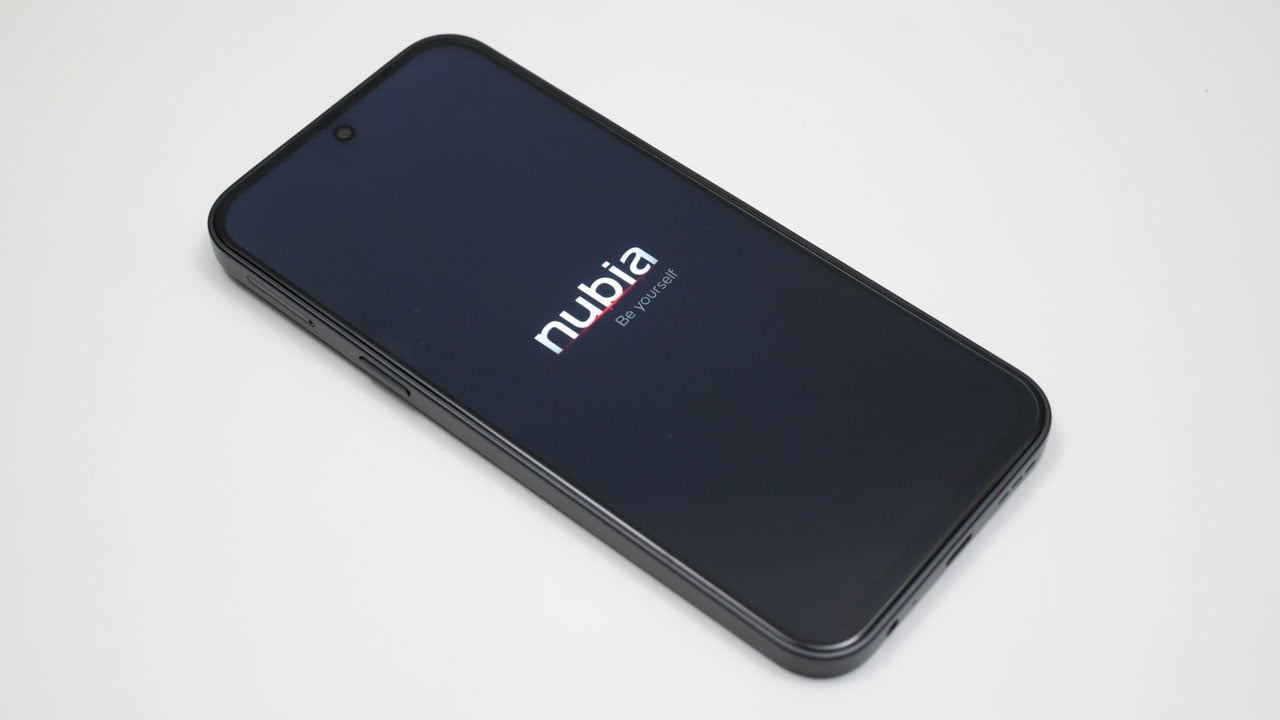
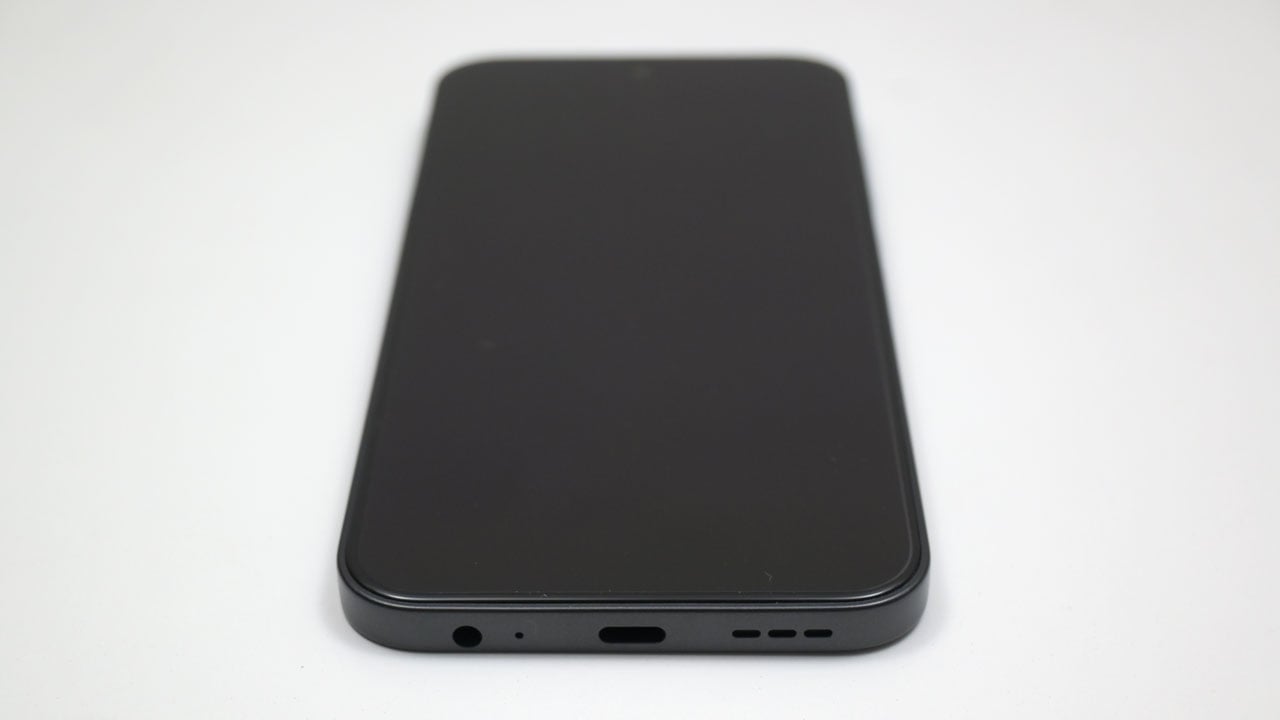
The nubia V80 Design is available in a trio of finishes: Pale Amber, Celadon Cyan, and the version we have on hand, Midnight Black. It features an expansive 6.75-inch display complete with a camera cut-out and the added convenience of a factory-applied screen protector.
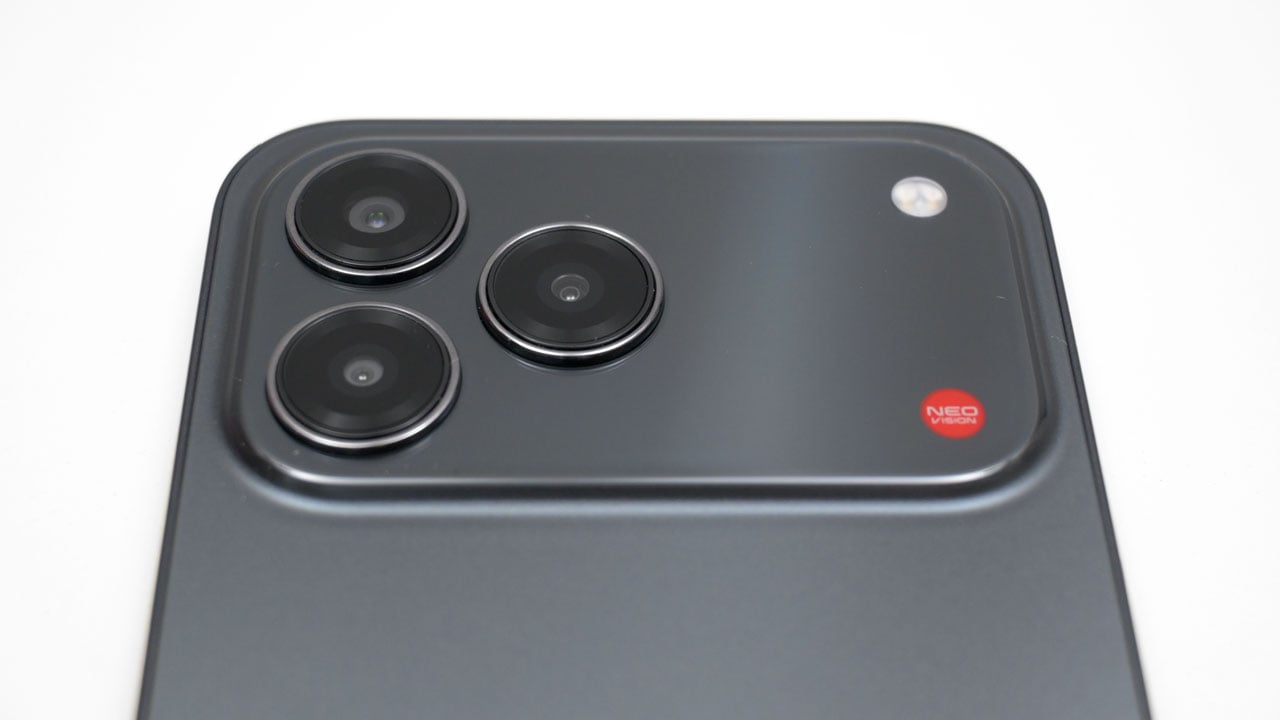
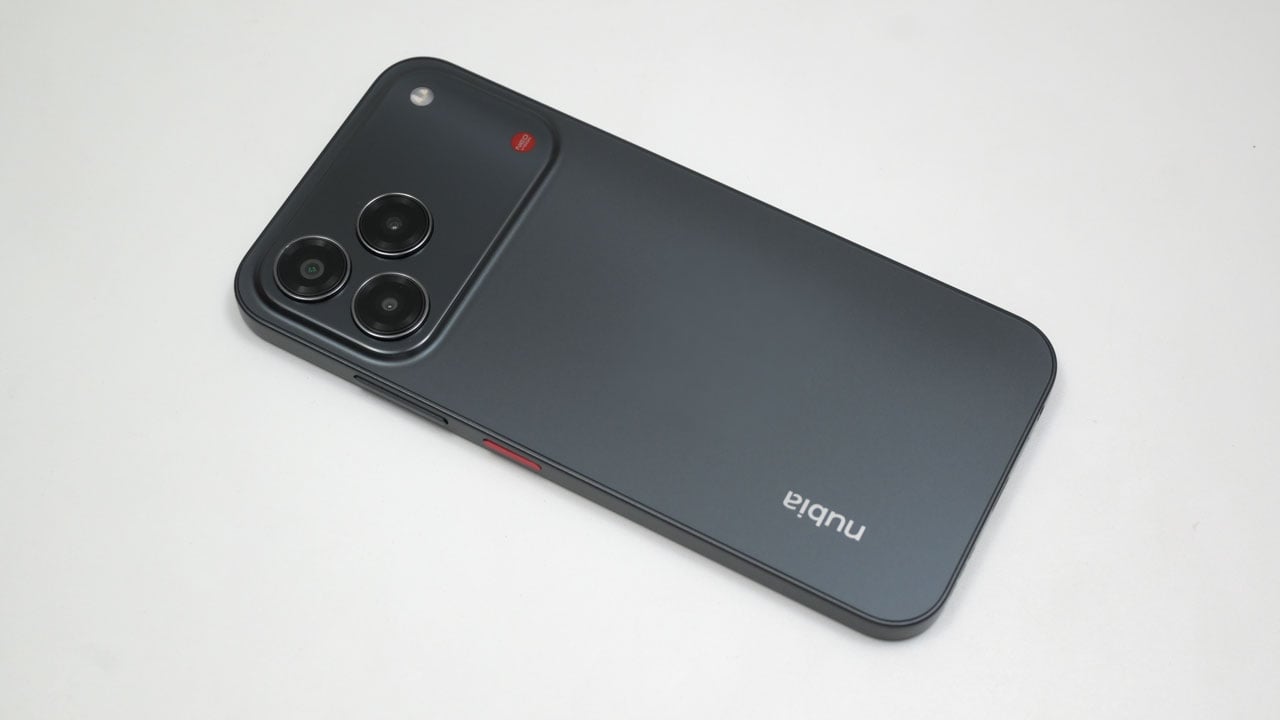
The rear panel is a clear homage to the iPhone 17 Pro, sporting a familiar camera island designed to give the phone an immediate flagship feel. To double down on that high-end aesthetic, nubia added a small red logo – a move likely inspired by Leica’s iconic branding.
The V80 Design offers four physical buttons, including a standard power button that pulls double duty as a fingerprint scanner. The most interesting addition, however, is the dedicated shortcut key on the opposite side. nubia likely included this to bridge the gap between software and hardware, providing a physical Action Button to instantly trigger the camera, AI assistant, or flashlight without needing to wake the screen or navigate the UI.
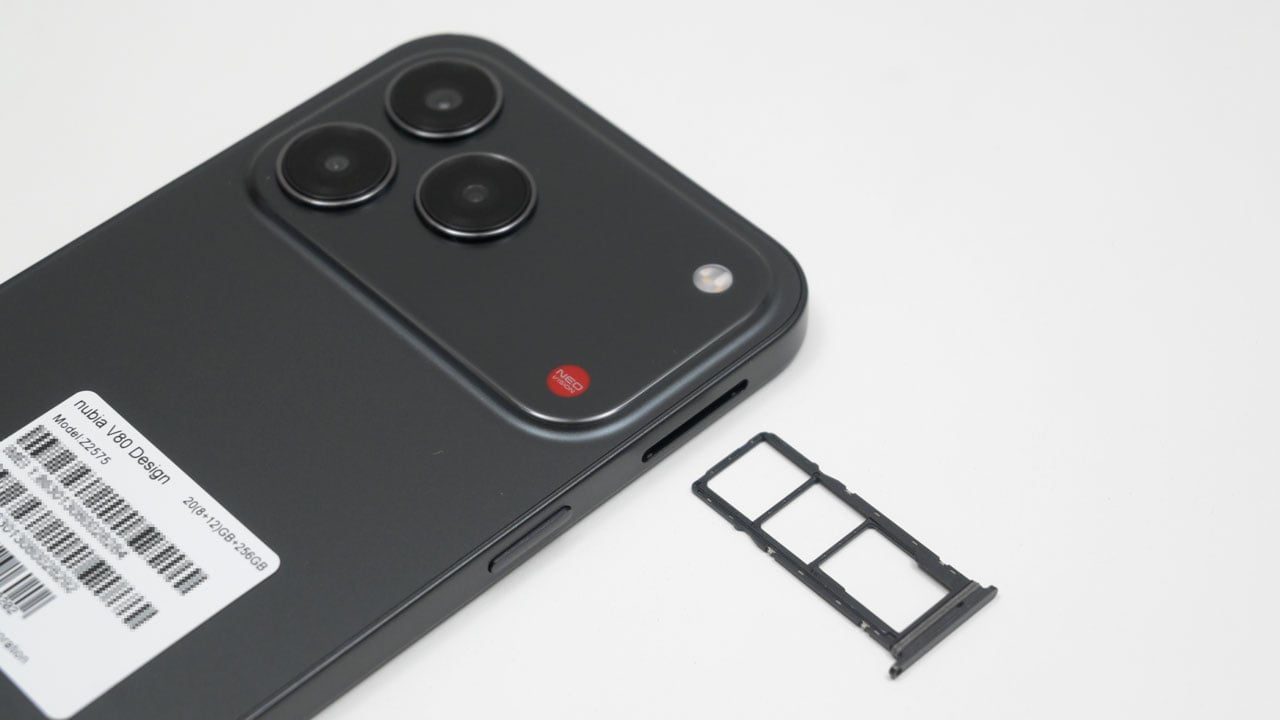
When it comes to connectivity, the V80 Design is surprisingly versatile. It features a tray for dual Nano-SIMs and a MicroSD card, catering to those who prioritize both high storage and multi-SIM users. While the 22.5 W USB-C charging keeps the 5,000 mAh battery topped up at a steady pace, the 10 W reverse charging effectively turning your phone into an emergency power bank for accessories. nubia also keeps things classic by retaining the 3.5 mm audio jack, ensuring that high-latency Bluetooth isn’t your only option for media.
Ergonomics
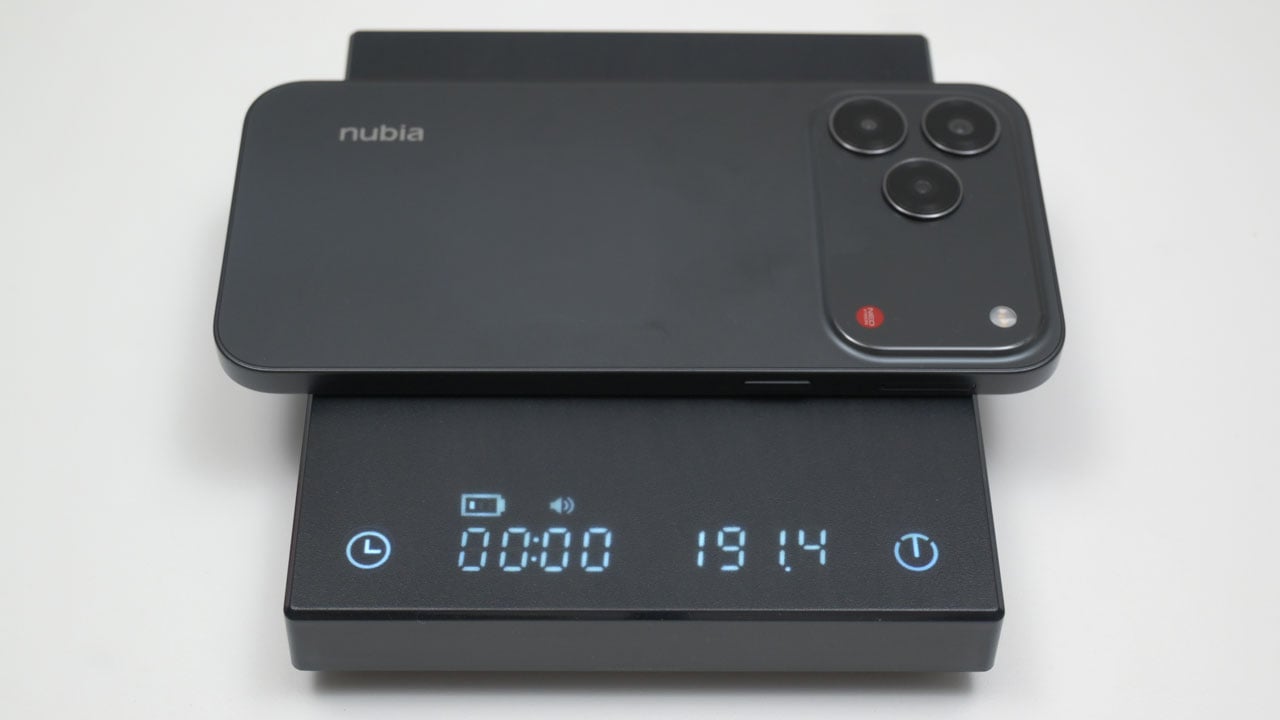
At 191 grams, the V80 Design occupies the ideal middle ground for modern smartphones. It feels well-balanced in the hand, offering a handling experience that is significantly more comfortable than the 200+ g max phones on the market. nubia likely arrived to this weight to strike a specific chord: it’s heavy enough to feel like a high-quality, substantial piece of tech, yet light enough to remain comfortable during marathon scrolling sessions.
Interface
Running on MyOS 16 (based on Android 16), the nubia V80 Design feels instantly familiar to anyone used to the modern Android ecosystem. A notable departure from MyOS 14 is the lack of a setup prompt asking you to choose between standard buttons or gesture navigation.
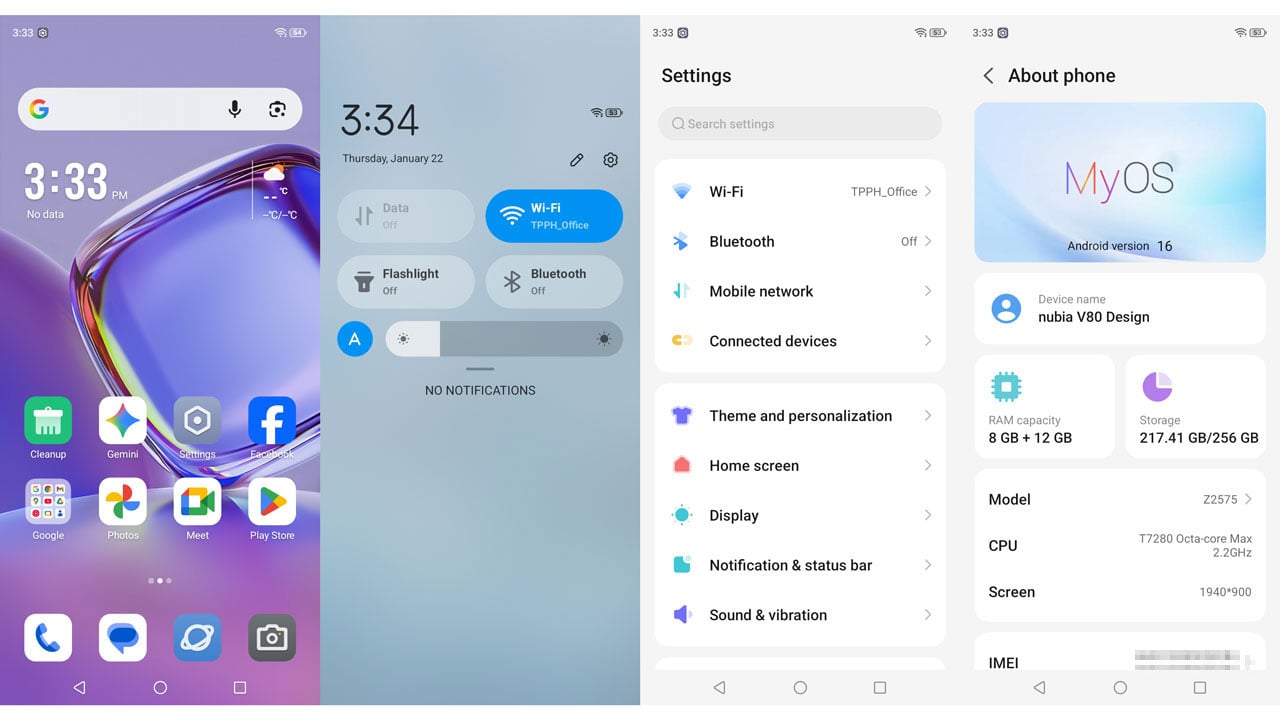
This change is likely a move to reduce decision fatigue during initial setup. By 2026, gesture navigation has become the industry standard, and nubia is likely betting that most users either want the modern default or are tech-savvy enough to swap back to buttons in the settings menu if they really need them.
Processor
The Unisoc T7280 is the engine under the hood of the nubia V80 Design, and its inclusion is a calculated move to balance cost with respectable day-to-day snappiness. By opting for an octa-core setup (2x Cortex-A75 for speed and 6x Cortex-A55 for efficiency), nubia provides enough power for smooth scrolling and multitasking without the price hike of a high-end chipset.
Graphics
Gaming performance here is a bit of a mixed bag. To put it kindly, it’s a casual-first machine. I went in expecting a bit more punch from the Mali-G57 MP1, but the performance reflects its entry-tier positioning. nubia likely chose this specific GPU configuration to prioritize thermal efficiency and battery life over raw frame rates. For the target audience who likely prioritize social media and video streaming over competitive eSports, this good enough performance is a logical compromise to keep the phone affordable.
Storage
In Disk Speed benchmarks, the 256 GB model of the nubia V80 Design clocked a solid 1,359 MB/s read speed and a more modest 249 MB/s write speed. While that write speed might seem underwhelming compared to a desktop PC, it is a leap forward compared to budget predecessors like the nubia Music Pro.
Network
The nubia V80 Design sticks to a tried and true connectivity suite. It utilizes Wi-Fi 5 (802.11ac) and 4G LTE, skipping the more expensive 5G and Wi-Fi 6 standards to keep the price at a highly competitive entry-level point.
Display
The V80 Design centers around an expansive 6.75-inch IPS panel that delivers a silky-smooth 120 Hz refresh rate. With its 19.5:9 aspect ratio, it’s a panel built for immersive media consumption and fluid gaming. While the marketing suggests a peak of 1000 nits, the tested 803.7 nits of actual brightness is still a massive win for an IPS display. This ensures that unlike most phones in this category, the screen remains perfectly legible even under the harsh glare of the sun.
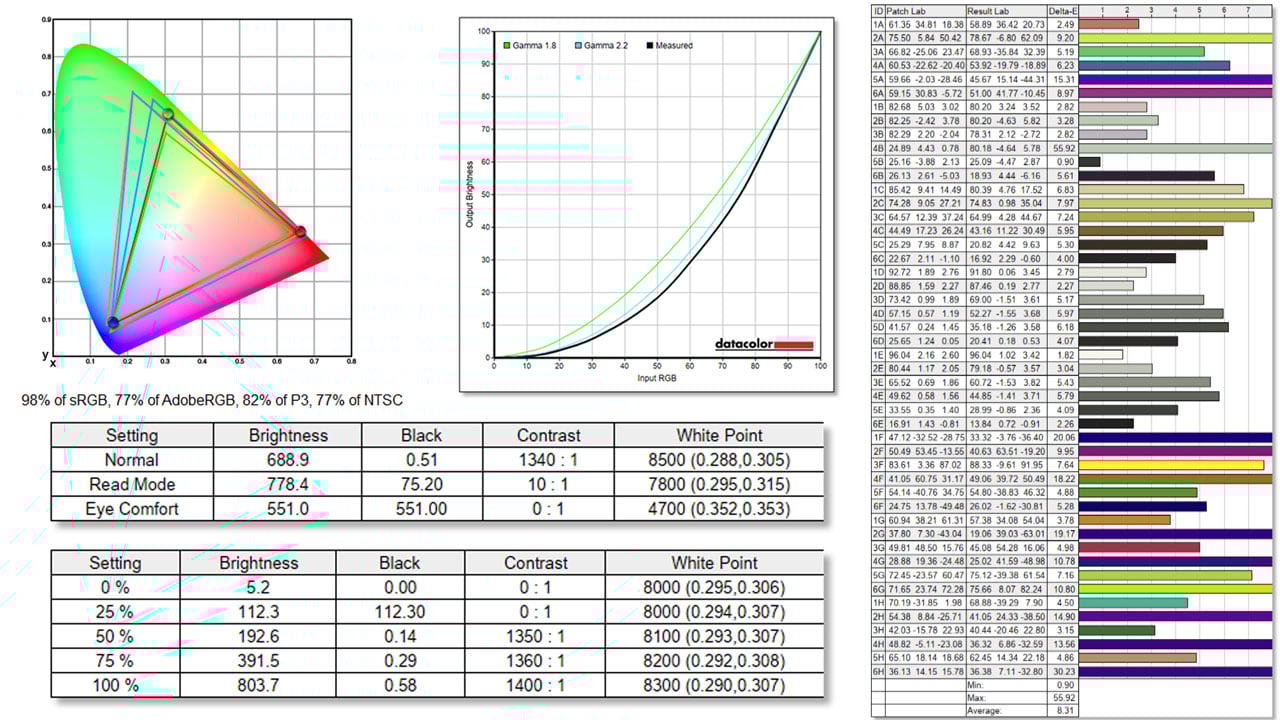
The nubia V80 Design offers good color coverage, high brightness, and deep contrast. However, it also has inconsistent gamma and color temperature, leading to a Delta-E of 8.31 at the color accuracy test, significantly impacting its overall rating.
| SpyderPRO | Display | |
|---|---|
| Color Gamut | 98% sRGB |
| Brightness | 803.7 cd/m2 |
| Contrast | 1400:1 |
| Gamma | 2.5 |
| Temperature | 8500 K |
| Color Accuracy | 8.31 ΔE |
Audio
Thanks to the inclusion of a 3.5 mm jack, we were able to put the nubia V80 Design’s internal DAC to the test. Interestingly, its audio performance is more than adequate – it actually surpasses the nubia Music Pro, a device specifically marketed for music. That said, the Music Pro still maintains the upper hand when it comes to loudspeaker output.
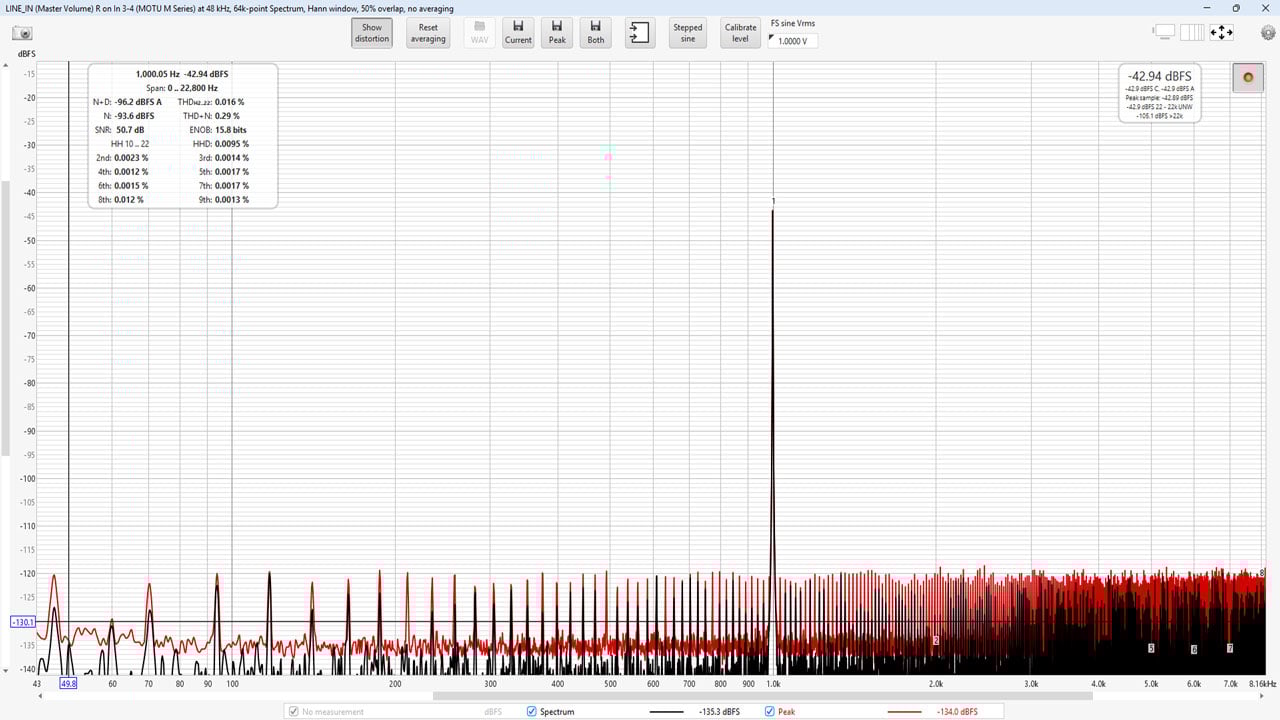
| REW | Audio | |
|---|---|
| THD | 0.016% |
| THD+N | 0.29% |
| Noise | -93.6 dB |
| N+D | -96.2 dB |
| SNR | 50.7 dB |
| ENOB | 15.8 bits |
Camera
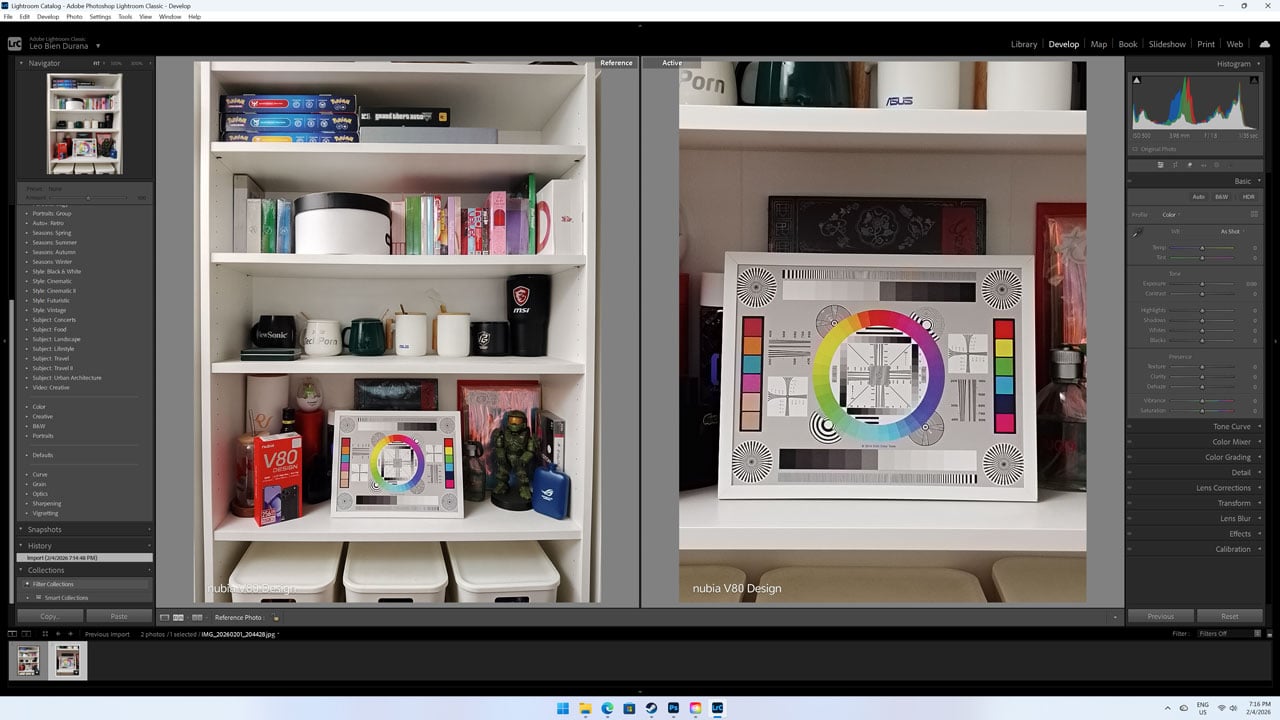
For its price point, the nubia V80 Design’s 50 MP AI main camera delivers competent results. While exposures are generally well-balanced with preserved highlights, the sensor struggles with dynamic range in the shadows, often leading to crushed details.
Temperature
The nubia V80 Design maintains impressive temperature control. It successfully completed the Burnout Benchmark under maximum load, topping out at just 37.6 °C.
Power
Equipped with a 5000 mAh battery and a power-efficient platform, the nubia V80 Design can theoretically last up to 5 days under light usage. Of course, real-world longevity is subjective – factors like brightness levels, audio volume, and app intensity will ultimately dictate individual results.
Final Thoughts
The nubia V80 Design is a study in prioritization. It is clearly built for those who value visual flair and storage capacity over raw performance or photographic precision. While it succeeds in mimicking the look of a high-end flagship, the internal hardware remains firmly rooted in the entry-level segment.
The most striking aspect of the V80 Design is the contrast between its exterior and interior. Outside, you have a slim, well-balanced chassis and a 120 Hz display that is legitimately impressive for this price bracket, particularly with its high peak brightness of 803.7 nits. Inside, however, the Unisoc T7280 and Mali-G57 GPU provide only enough power for casual-first usage. As our benchmarks show, this is not a device for gamers or power users; it is a machine for browsing, messaging, and media consumption.
The nubia V80 Design is a functional, attractive budget phone that makes very specific compromises. It trades processing power and camera versatility for storage volume and display smoothness.
If you are a heavy gamer or a mobile photography enthusiast, this device will likely frustrate you. However, for a user who needs a stylish daily driver with plenty of space for apps and photos – and who doesn’t mind the slower 4G speeds and modest processing power – it represents a practical, if unexciting, value proposition.
nubia V80 Design ₱8799

Product Name: V80 Design
Product Description: The nubia V80 Design is a high-storage, entry-level daily driver with premium styling but with a modest performance.
Brand: nubia
Summary
By merging an undeniably premium aesthetic with high-end display specs and abundant storage, nubia has built the V80 Design to feel far more expensive than its price tag suggests. However, as our testing reveals, that “flagship” feeling is sometimes skin-deep.
Pros
- 120 Hz refresh rate, high-brightness screen
- 8+256 GB model at sub $200
- Good thermal management
- Modern premium-like design
Cons
- Triple-lens look is primarily aesthetic
- Display color accuracy could be better
- Lacks 5G and Wi-Fi 6